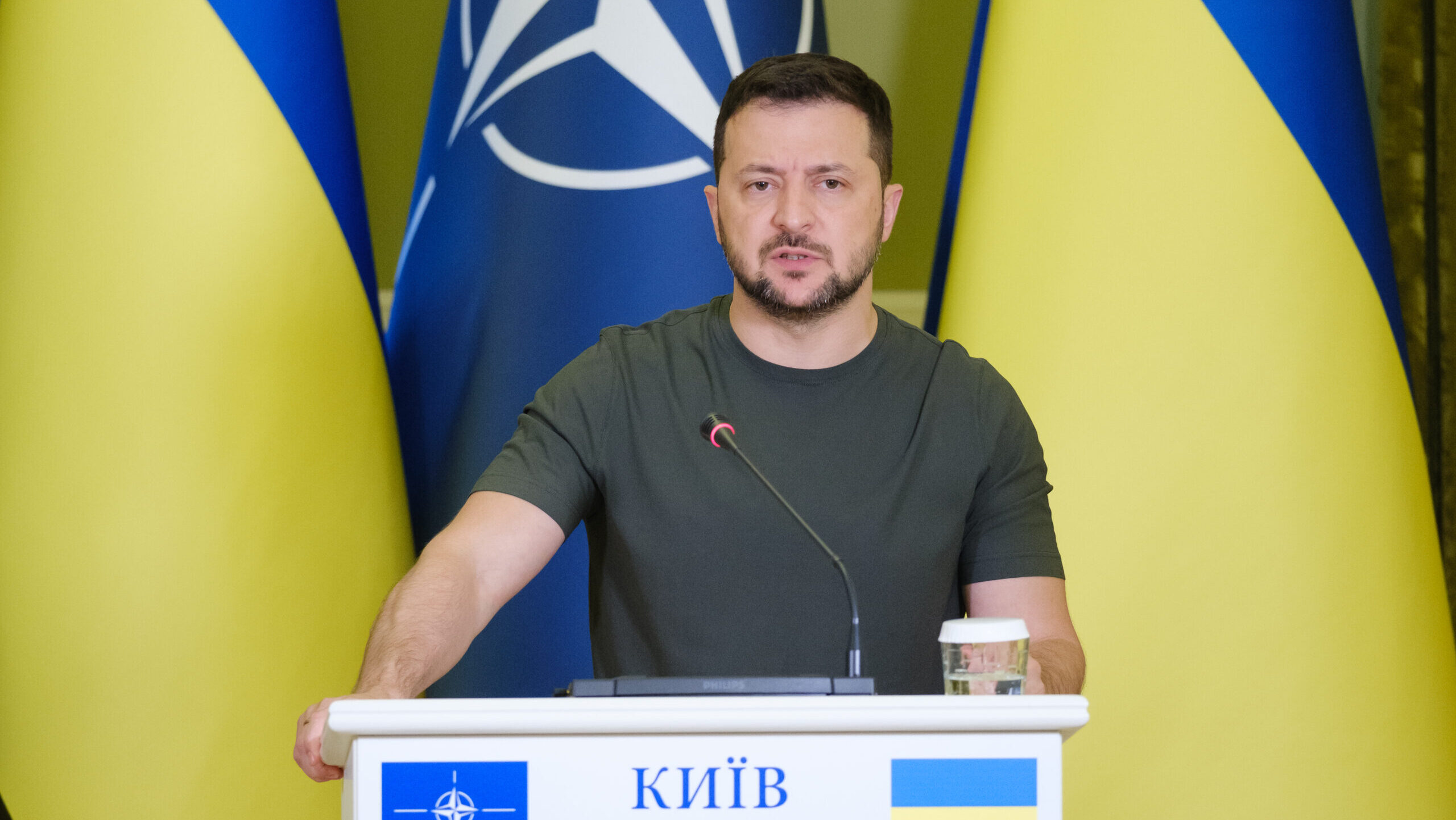
The U.S. Army Futures Command is using Raytheon’s RCADE simulation tool to conduct theater-level concept experimentation and mission analysis to support agile learning of the future battlefield. (Raytheon image)
It’s one thing to describe in words a new defense system, and another to visualize it. Even better to demonstrate it in an advanced modeling and simulation environment so leaders can better understand risks, design trades and, most importantly, how it integrates with other systems across kill chains and domains.
Such a theater-level modeling and simulation tool exists today in the form of the Rapid Campaign Analysis and Demonstration Environment (RCADE). Developed by Raytheon Advanced Technology, an incubator within RTX that is developing capabilities like the U.S. Air Force’s Hypersonic Attack Cruise Missile, RCADE is designed to help defense leaders determine the most important kill-chain attributes that will be needed in potential conflicts of the near future and in years to come.
In mid-2024, the U.S. Army Futures Command-Futures and Concepts Center (FCC) awarded Raytheon Advanced Technology a contract to conduct theater-level concept experimentation and mission analysis to support agile learning of the future battlefield. Under the contract, Raytheon Advanced Technology uses RCADE to develop theater-level scenarios to help the Army assess concepts for joint multi-domain operations. The goal is to change outcomes for the positive through quantitative data and findings from demonstration scenarios that point to potential technical achievements and capabilities needed to succeed in future conflicts.
A theater-level perspective of the kill chain
As the complexity of battlefield scenarios increases, future defense challenges have to be approached from both a theater- and mission-level perspective. Having that vantage point has never been more important — or more difficult to come by.
“After several conversations with Army Leadership, it became clear that modeling and simulation, and more specifically the ability to do rapid, iterative turns, could expedite the process to identify where capability gaps may exist, and how to address them,” said Tom Goolsby, senior principal engineer, Raytheon Advanced Technology. “We introduced RCADE as a way to augment, buttress and enhance their existing capability. With RCADE we’re able to help the Army see what an integrated solution might look like in terms of the full warfighting capability.”
For senior leaders, in particular, RCADE analyses help them understand decision trade space and associated risk. When they’re making hard decisions, and have to justify and defend those decisions, RCADE provides them with quantitative analysis they can rely upon.
“We’re not trying to predict the exact future,” said Goolsby. “With RCADE, we create a baseline for a certain combination of systems in a particular theater, and then try to understand trade-offs or deltas when we insert new technologies, capabilities, and alternate employment support structures. All those become new reference points that show us where the results from the model improved, or vice versa.”
“RCADE gives you a rapid ability to test concepts; is this a good or bad idea for this theater and use case,” said Goolsby. “Our goal is to maximize the number of iterations as quickly as we can.”
Understanding trade-offs in theater campaigns
Computational theater-level analysis stretches back many decades, pioneered both within the government and private sector institutions such as the RAND Corporation. Today’s DoD has excellent tools and program offices for that purpose, and also modeling and simulation capabilities targeted at detailed system development and program execution. Sometimes, though, a theater-level situation arises where they can’t cover a broad trade space in the time that a decision needs to be made.
While Defense Department capabilities remain critical, RCADE’s role comes to the forefront when answers to questions are needed sooner than later or when more information is needed to know what to study in detail. This is where the “R” for rapid in RCADE comes in.
“RCADE studies are not typically focused on integrating existing products for near term outcomes, but instead consider more ‘green space’ problems,” said George Blaha, a Raytheon principal engineering fellow. “Our work with the Army Futures Command is looking out 10-15+ years. When we’re trying to figure out the big trade-offs in large-scale theaters like INDOPACOM or EUCOM for example, that complexity is what drives the need for a tool like RCADE.”
RCADE’s versatility helps defense leaders see what an integrated solution might look like in terms of the full warfighting capability and visualize and quantify the impacts of different capability mixes and employment concepts. It provides insight into the key pillars of their acquisition process – cost, schedule, and performance – so they can shape their long-term investment strategies.
Breaking Defense Video