All Domain

Army SMDC reviewing classification in push for improved integration with allies

Col. Mark Cobos, head of SMDC's 1st Space Brigade, told Breaking Defense in an Oct. 7 interview that the command and the brigade are already "making progress" in creating allied partnerships — starting with the United Kingdom.

Lt. Gen. Sean Gainey, commander, Army Space & Missile Defense Command

Lt. Gen. Sean Gainey, commander, Army Space & Missile Defense Command, speaking at AUSA 2024 on Oct. 14. (Photo credit: Theresa Hitchens/Breaking Defense)

AUSA 2024 — Army Space and Missile Defense Command (SMDC) is working to lower the classification levels of its space capabilities as part of a wider effort to improve its ability to work with allies and partners, senior command officials said today.

“We’re currently in a rewrite of our security classification guide to open up the aperture,” Col. Donald Brooks, commandant of the Space and Missile Defense Center of Excellence (SMDCOE), told the Association of the US Army conference today.

SMDCOE is responsible “for managing Army change to doctrine, organization, training, materiel, leadership and education, personnel, facilities and policy,” according to the SMDC website.

“But I would argue, as we’re developing capabilities we need to do a better assessment: ‘Is it state of the art versus state of the world?’ I would say that there’s a lot of things that come out, and we’re developing, that are state of the world, but we put way too tight restrictions on that security classification, and then we ignore our partners,” he said. “And as we all understand, space is inherently joint, multinational and a commercial enterprise, and we’ve got to figure out ways that we can more effectively and efficiently integrate our entire partners, the entire suite of partners, to [solve] a problem set.”

While loathe to promise a completion date for the effort, Lt. Gen. Sean Gainey, SMDC commander, said the command “understands the urgency” of being able to bring allied and partner space capabilities into the fight.

Army officials see space capabilities as critical to implementing both its own multi-domain task force concept, but also the Pentagon’s ambitious Combined Joint All Domain Command and Control (CJADC2) plans. And lowering space classification levels, the SMDC officials stressed, is critical to both sharing information with allied and partner nations, and being able to operate together on the battlefield.

Col. Mark Cobos, head of SMDC’s 1st Space Brigade, told Breaking Defense in an Oct. 7 interview that the command and the brigade are already “making progress” in creating allied partnerships — starting with the United Kingdom.

“At the top of that list is our partnership with the UK and UK Space Command, and a relationship that has just absolutely blossomed [recently] because of mutual interest and mutual philosophies about how to conduct operations,” Cobos said.

“I can’t say enough about the strength and the magnitude of the partnership between Army space and our UK counterparts, just just being an incredible story of of not only security cooperation, but the strength of the security cooperation, but the strength of the Alliance, and just the tremendous things happening there,” he added.

Command Master Sergeant Maurice Tucker told the AUSA audience that the 1st Space Brigade has been talking with the UK about tactics, techniques and procedures, as well as “employment opportunities, employment processes, and how they can employ their systems much like how we utilize ours, so that we’re building that common space.”

Meanwhile, SMDCOE is planning “an exchange program” under which a UK Space Command instructor will come to the center’s space education “schoolhouse,” and vice versa, Brooks said. The center also is in discussions with Australia and New Zealand about doing the same, he added.

PHOTOS: AUSA 2024

PHOTOS: AUSA 2024

At AUSA 2024, land vehicle giant AM General rolled its HUMVEE 2-CT Hawkeye MHS, featuring a howitzer launcher on a hummer. (Brendon Smith / Breaking Defense)
Ammo handling specialists Nobles Worldwide brought its closed loop, linkless ammunition handling system to AUSA 2024. (Brendon Smith / Breaking Defense)
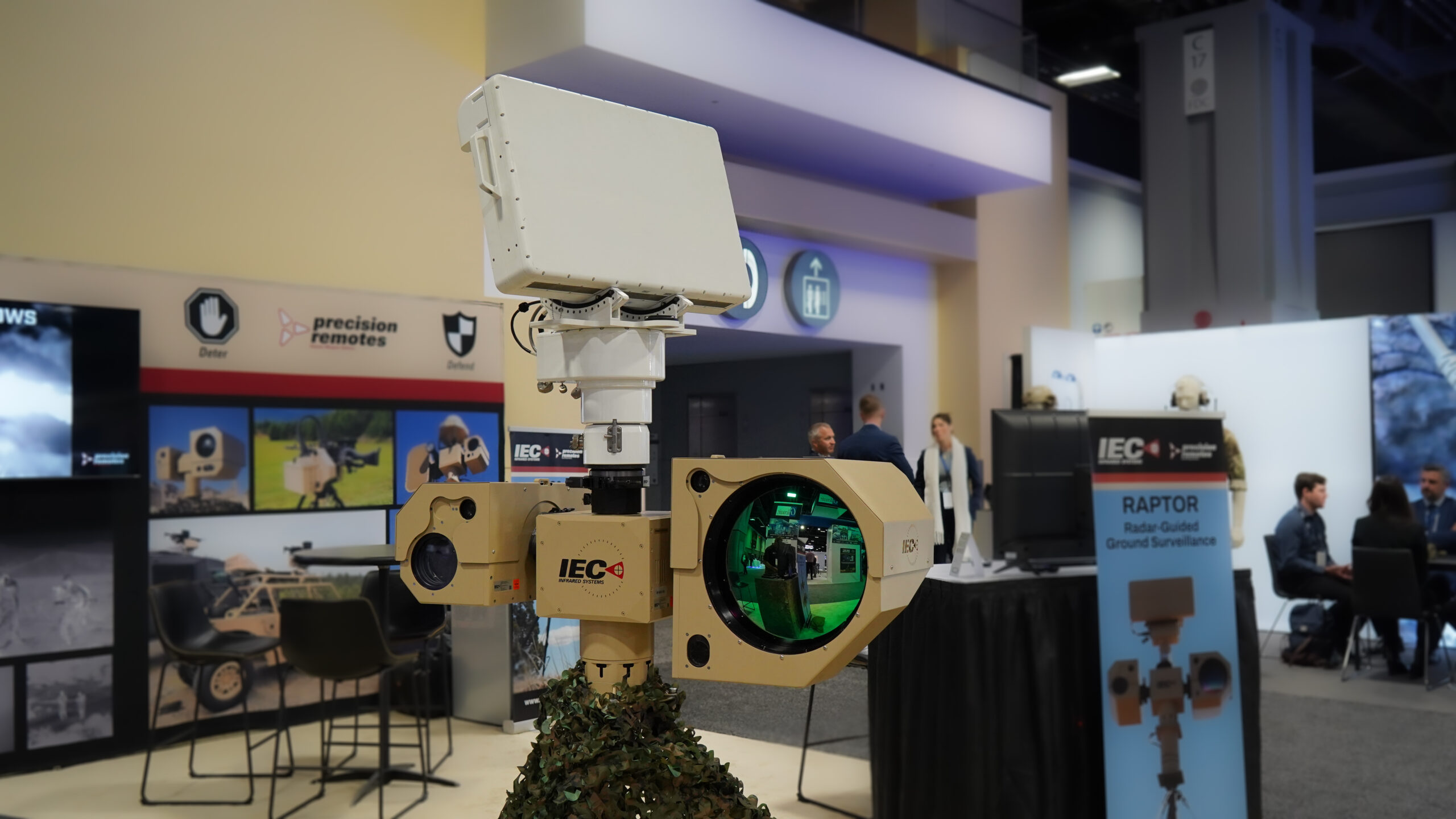
IEC Infrared Systems's Lycan counter-UAS system gazes out at attendees at AUSA 2024. (Brendon Smith / Breaking Defense)
Australian firm EOS was at AUSA 2024, here displaying its Slinger kinetic counter-drone system. (Brendon Smith / Breaking Defense)
Defense start-up Anduril makes a wide range of products and at AUSA 2024, including his platform from its "family of autonomous systems and Electromagnetic Warfare (EW) systems powered by Lattice and AI at the edge." (Brendon Smith / Breaking Defense)
Aimlock, which develops "semi-autonomous precision auto-targeting systems" attached a 12-guage shotgun on a ground robotic vehicle at AUSA 2024. (Brendon Smith / Breaking Defense)
Connecticut-based Kaman Corporation offers unmanned cargo copters, as seen on the show floor at AUSA 2024. (Brendon Smith / Breaking Defense)
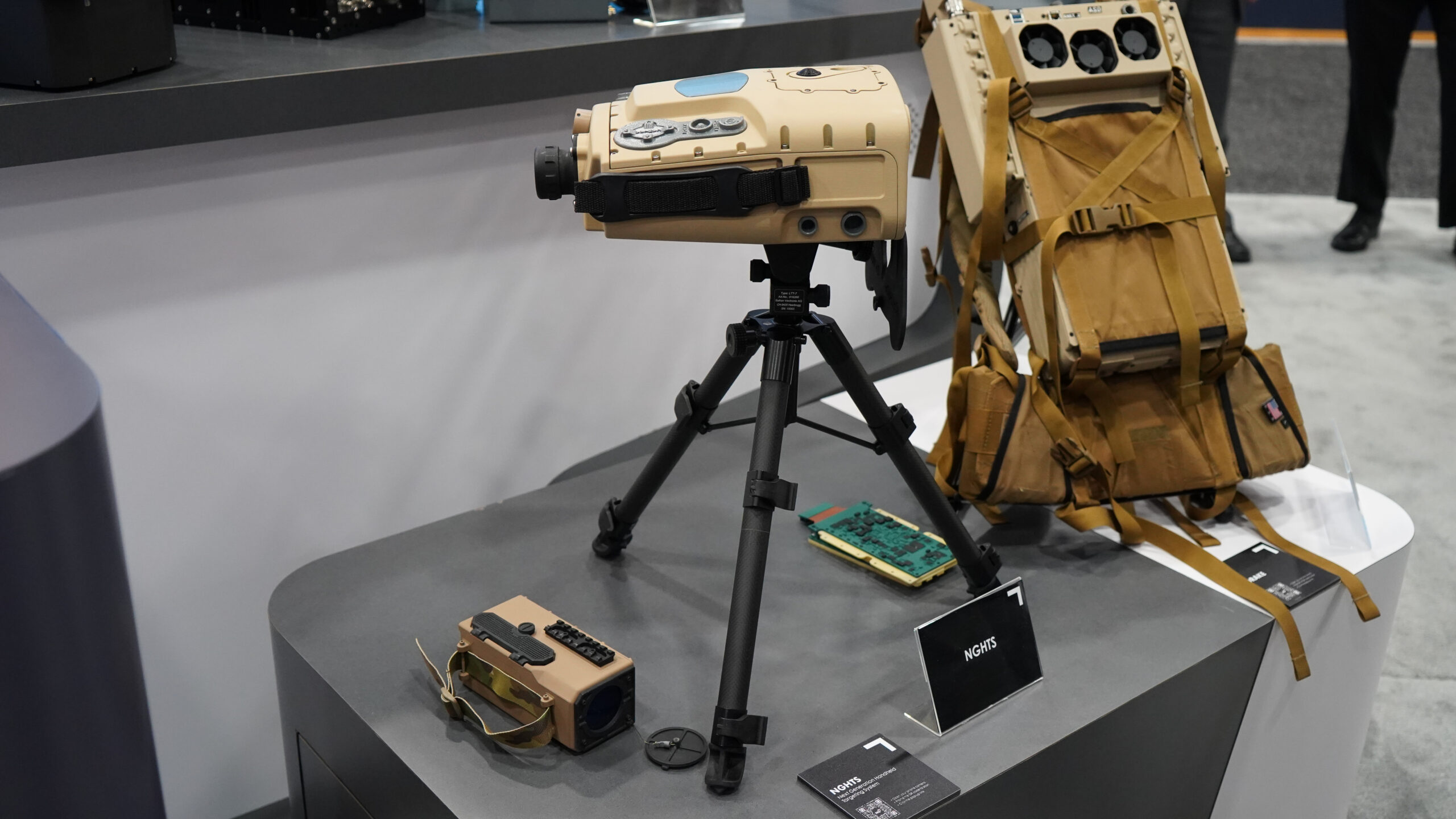
Defense giant Northrop Grumman shows off its Next Generation Handheld Targeting System (NGHTS), which the company says is designed to work in GPS-denied environments. (Brendon Smith / Breaking Defense)
Taiwanese Thunder Tiger displayed an unmanned surface vessel, Seashark, at AUSA 2024. (Brendon Smith / Breaking Defense)
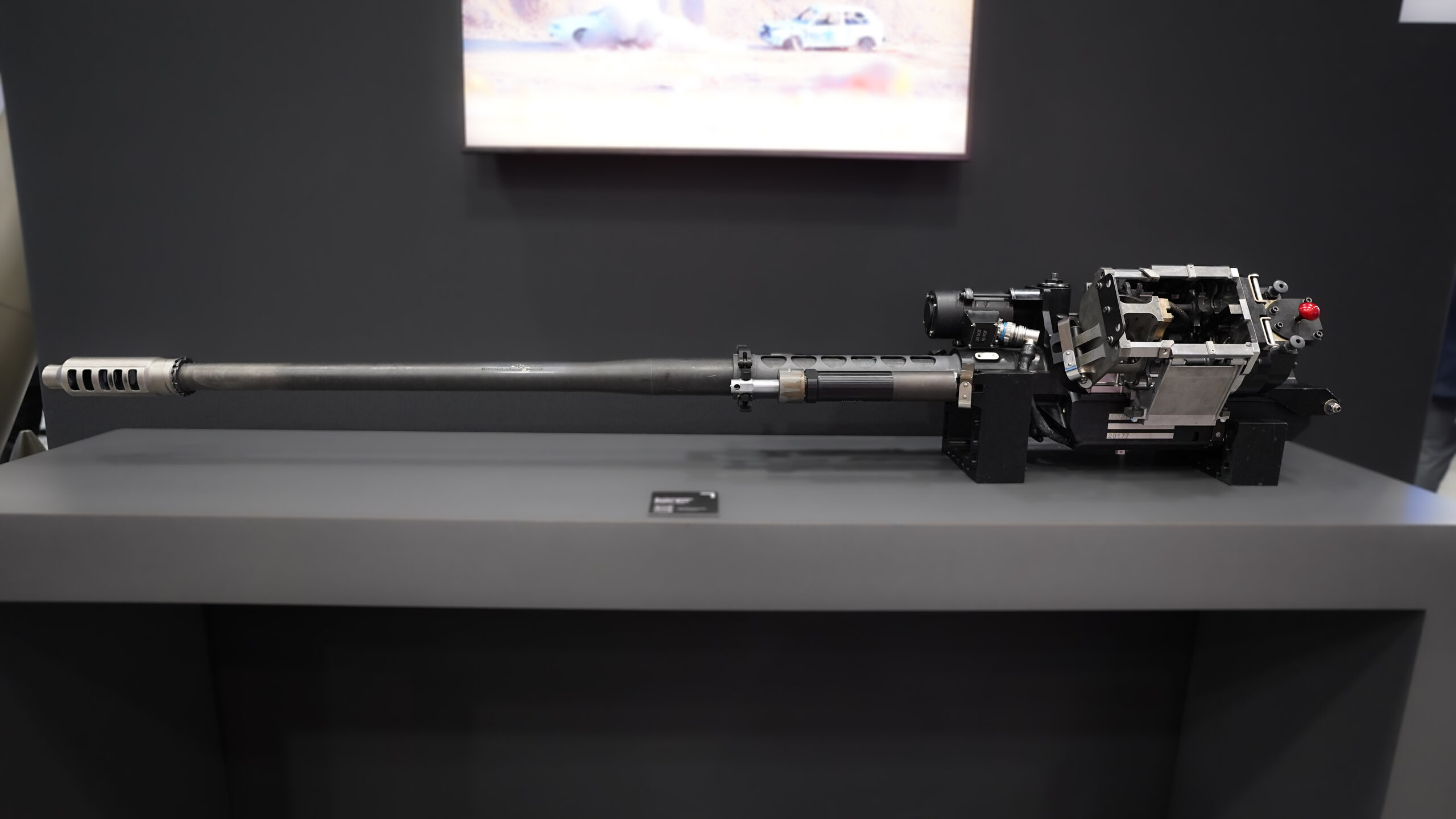
Northrop Grumman shows off its Bushmaster chain gun at AUSA 2024. The company launched a new Bushmaster M230LF (Link Fed) dual-feed chain gun, designed to neutralize UAS and ground threats, with the manufacturer targeting export customers for future orders. (Brendon Smith/Breaking Defense)
It's less ominous than it looks: Avon Protection's Core Intelligent undersuit and MCM100 Multi-Role Military Diving Rebreather are marketed on the show floor to help military divers keep warm under the water. (Brendon Smith/Breaking Defense)
Edge Autonomy shows off its E140Z camera, part of its Octopus surveillance suite. (Brendon Smith/Breaking Defense)
Flyer Defense shows off its Flyer 72 vehicle at AUSA 2024. Selected by SOCOM, the company says it is capable of internal transport in the CH-47 and C-130 aircraft. (Brendon Smith/Breaking Defense)
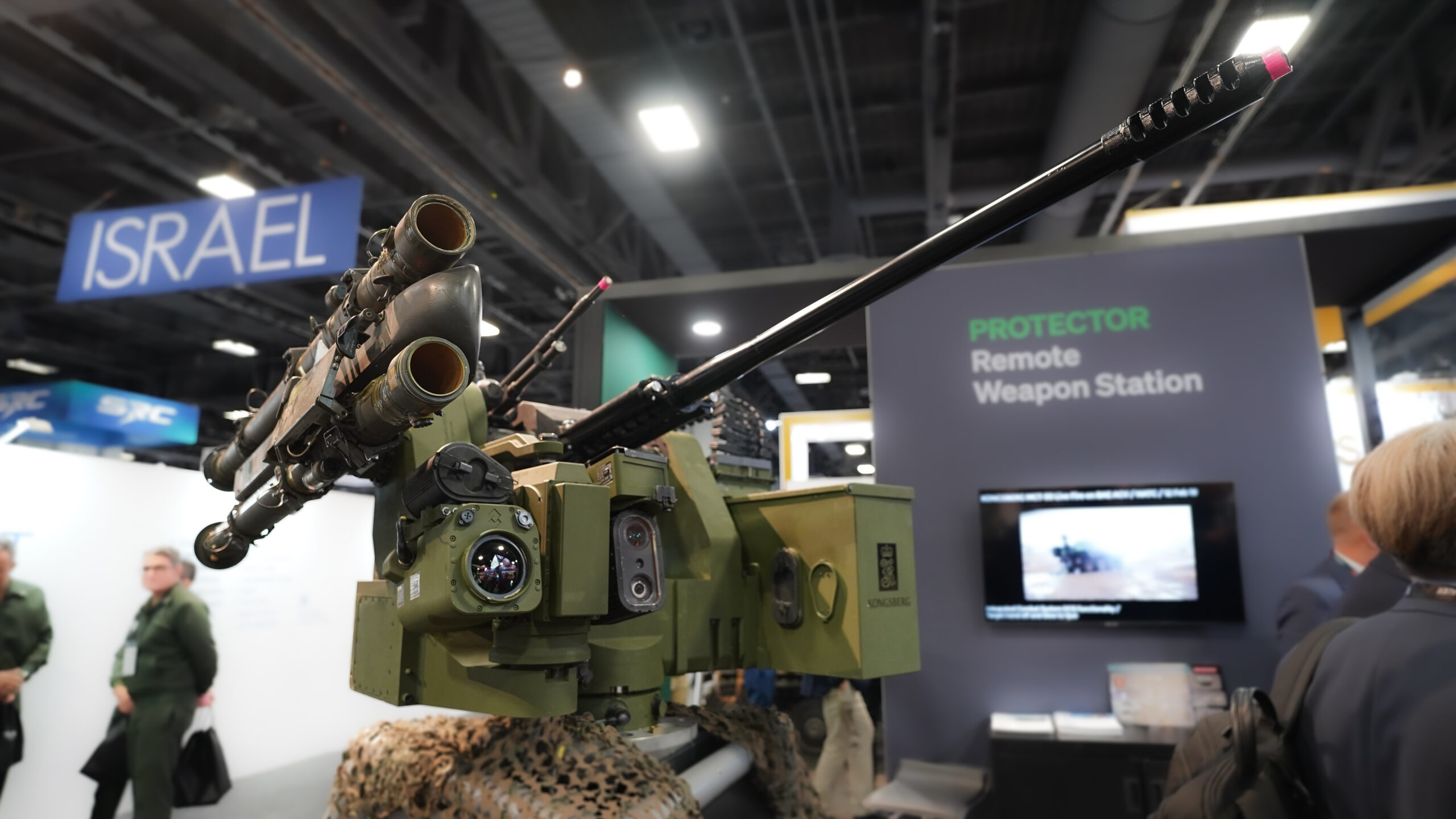
The Kongsberg Protector RS6 is a Remote Weapon System for low-recoil 30mm cannons. The company says it will be able to equip other weapons in the future. (Brendon Smith/Breaking Defense)
Bell helicopters showed off a number of items on the show floor. (Brendon Smith/Breaking Defense)
One of BAE's two AMPV varients on the show floor at AUSA 2024, this one sports the company's Modular Turreted Mortar System. (Brendon Smith / Breaking Defense)
Oshkosh Defense displays its Remotely Operated Ground Unit for Expeditionary Fires (ROUGE-Fires) on the floor at AUSA 2024. (Brendon Smith / Breaking Defense)
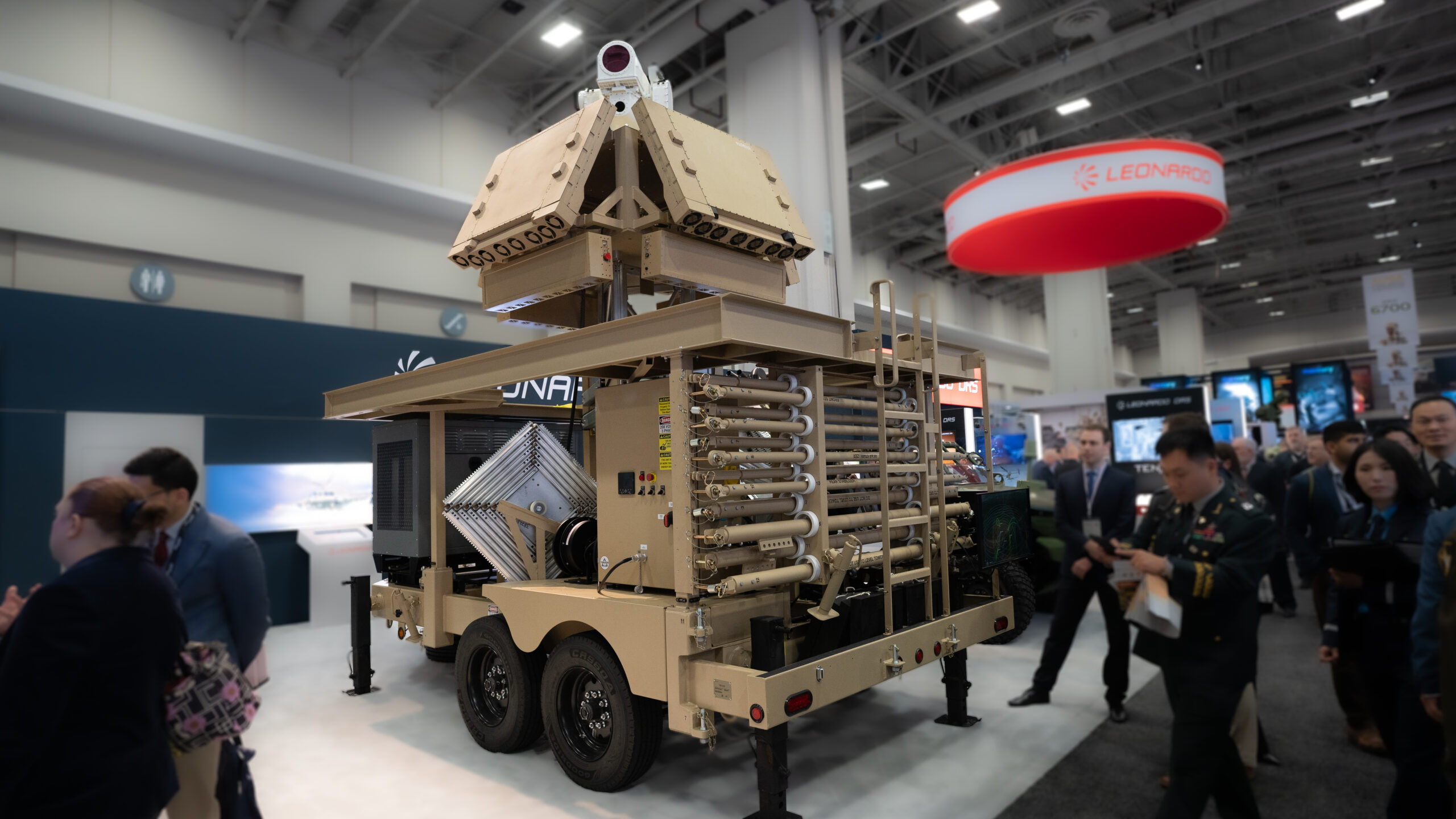
A Leondardo extended mast surveillance system ready to roll into position at AUSA 2024. (Breaking Defense)
Allison Transmission eGen Power motor on display at AUSA 2024. (Brendon Smith / Breaking Defense)
Leidos's Airshield counter-UAS system sits at the company's booth at AUSA 2024. (Brendon Smith / Breaking Defense)
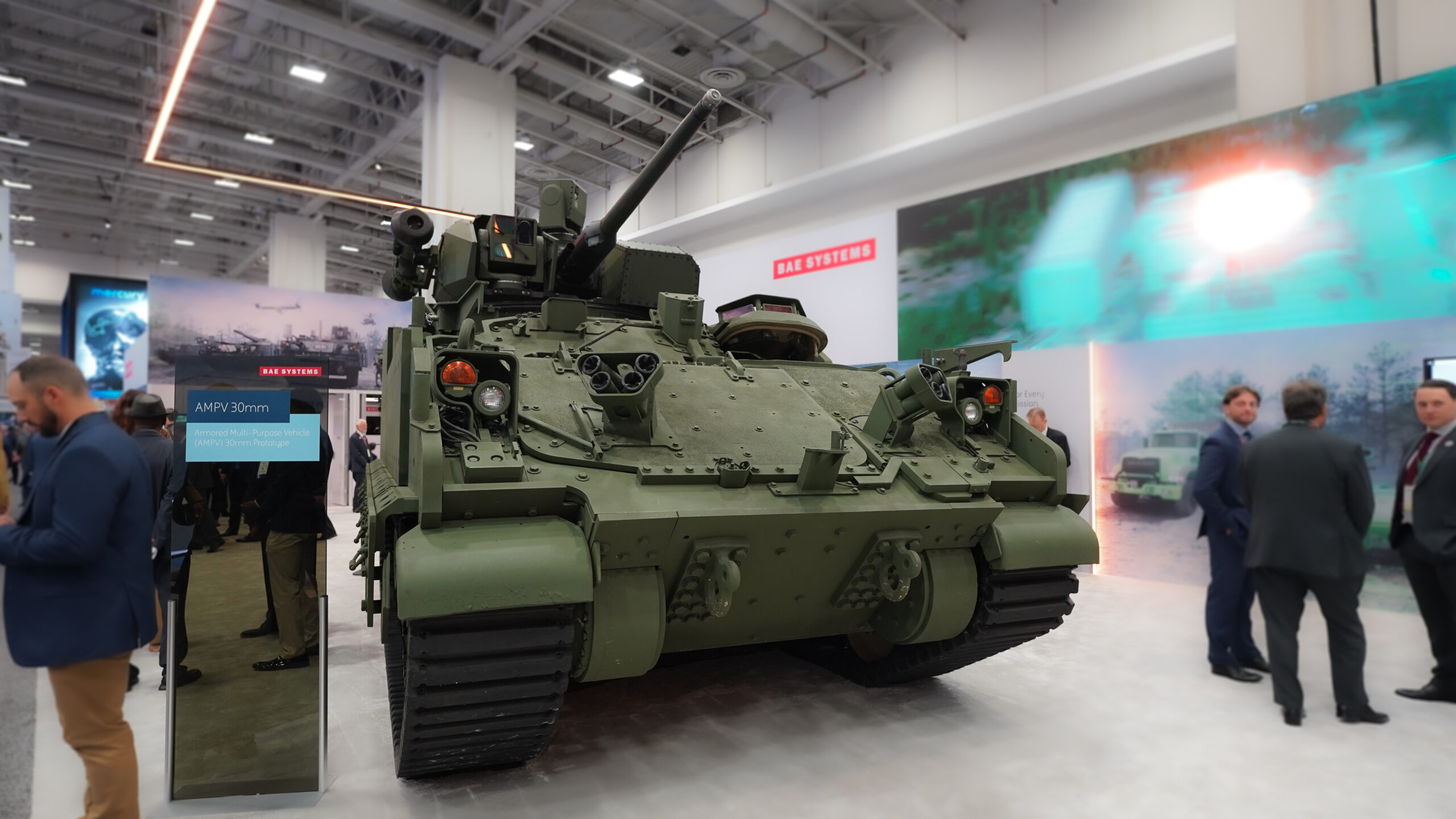
BAE's Armored Multi-Purpose Vehicle (AMPV) with a 30mm gun on display at AUSA 2024. (Brendon Smith / Breaking Defense)
A heavily armed next-gen tactical vehicle on display from GM Defense at AUSA 2024. (Brendon Smith / Breaking Defense)
At AUSA 2024, Rohde & Schwarz displays a mobile signals system known as SigBadger. (Brendon Smith / Breaking Defense)
Breaking Defense Video