Mr. Young Bang, Principal Deputy Assistant Secretary of the Army (Acquisition, Logistics and Technology,) addresses the moderator and members of the panel during the Under Secretary of the Army’s Digital Transformation Panel at the Walter E. Washington Convention Center in Washington, D.C., Sept. 10, 2023. (US Army photo by Henry Villarama)
WASHINGTON — Army acquisition officials are working with their counterparts in the Office of the Secretary of Defense on how to speed up AI programs. The service has even suggested developing a special AI variant of the existing Software Acquisition Pathway (SWP), although OSD seems less than enthused about that proposal, according to statements by both Army and OSD officials Tuesday at the annual Professional Services Council conference on defense.
Software development in general moves fast, but AI specifically can evolve even faster, said Young Bang, the principal civilian deputy to Army acquisition chief Doug Bush.
“Once you make the algorithm, really, you can extend and retrain them at the edge, [and] you can do that quickly,” Bang told the PSC conference. In some cases, “I can train algorithms literally overnight,” he said. “Some of these take actually take a little bit longer … [maybe] a week.”
The ability to update AI in days is an even tighter cycle than envisioned by the standard Software Acquisition Pathway, which was created in 2020 to accelerate development of software in general by adopting best practices from the private sector. (SWP was part of a larger package of reforms first proposed in fall 2019 by then-Under Secretary for Acquisition Ellen Lord).
“There’s great utility in the Software Pathway,” Bang said. “[But] the requirement in there is that you do an MVCR [Minimum Viable Capability Release] in a year. … We’re endeavoring to get capabilities out faster.
“We’re actually working with OSD A&S [Acquisition and Sustainment] to … see how we can actually create a sub-path in the Software Pathway for AI,” Bang said. “We don’t know all the details, we’re still working it out.”
“It is something that I’m sure that we’re continuing to sort through,” said Deborah Rosenblum, the acting deputy to DoD acquisition chief Bill LaPlante, when asked about the topic later during the same conference. “[We’re] definitely not looking at a new pathway. … I do believe it’s likely to be through the Software Pathway, if only because we’re trying to expedite and move quickly, and we feel the way in which the pathway is designed has enough flexibility and agility to be able to accommodate for that.”
But Rosenblum didn’t explicitly rule out Bang’s suggestion of carving out a “sub-pathway” within SWP. Neither did one of her senior aides, contracting expert John Tenaglia, in a sidebar conversation with Breaking Defense. The system is intended to be flexible, Tenaglia emphasized: “In reality, there’s mixing and matching” of different accelerated procurement authorities, he said, for example by hybridizing a SWP procurement with other contract types.
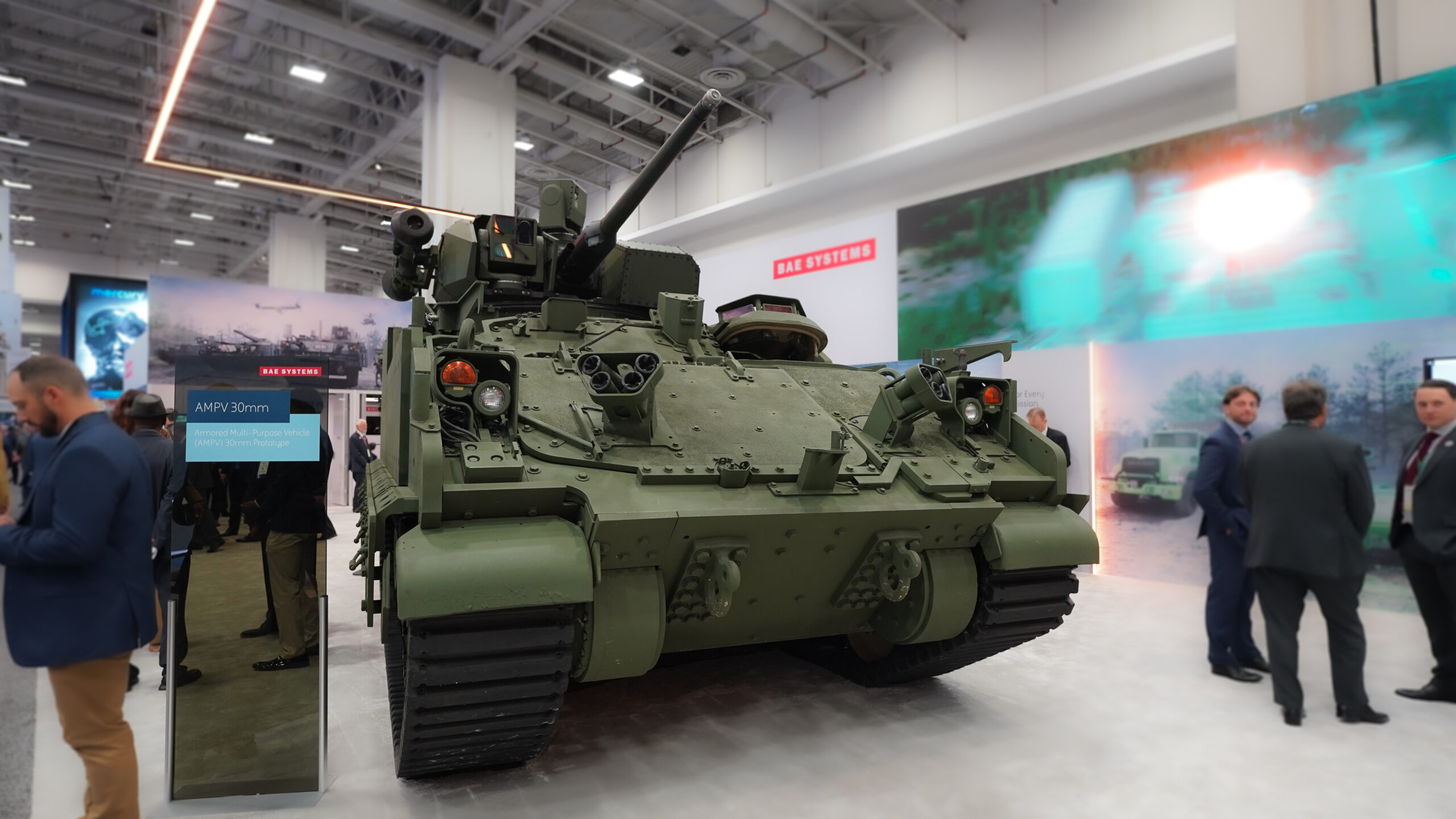
Bang, too, touted the ability to mix-and-match: The service’s high-profile XM-30 program to replace the Reagan-era M2 Bradley troop carrier, he noted, involves both a Software Pathway acquisition for the code and a Mid-Tier Acquisition (MTA) for the physical vehicle, allowing software updates to race ahead independent of the slower development cycles for hardware. (The even more ambitious Robotic Combat Vehicle program has a similar software-hardware split). But he still wanted more agility than he believed the current system could provide.
“I’m about disrupting the status quo,” Bang told the PSC conference. “Let’s figure it out, let’s be creative, let’s put things together, let’s put an MTA with the Software Pathway and work with OSD to get to something faster for AI.”
PHOTOS: AUSA 2024

 Gallery













Breaking Defense Video