Air Warfare

Navy says future drone wingmen need to come in under $15 million price point

“I want something that's going to fly for a couple hundred hours. The last hour it's either a target or a weapon. ... But I'm not going to sustain them for 30 years,” said Rear Adm. Stephen Tedford, the Navy’s program executive for unmanned systems and weapons.

20210227raaf8185068_0089-copyright_960x640

An MQ-28 Ghost Bat drone flies in tests for the Royal Australian Air Force. (Australian Department of Defence)

SEA AIR SPACE 2024  —  The Navy is in the nascent stages of evaluating how to bring autonomous combat drones to the decks of aircraft carriers, but the service’s top official for unmanned programs says one thing is certain: The drones will have to be cheap, topping out at about $15 million per unit.

To keep prices low, the Navy will likely sacrifice the longevity of each so-called Collaborative Combat Aircraft, said Rear Adm. Stephen Tedford, the Navy’s program executive for unmanned systems and weapons. Instead of being sustained over a 40-year lifecycle, a single drone could be catapulted and recovered off the deck of an aircraft carrier a handful of times for surveillance and strike missions before ending its service life as a kamikaze drone.

“I want something that’s going to fly for a couple hundred hours. The last hour it’s either a target or a weapon. I’m either going to hit something with it or I’m going to train [a sensor on it] and shoot it down,” he said today during a briefing at the Sea Air Space conference. “But I’m not going to sustain them for 30 years.”

In contrast to the Air Force, which has made its CCA a major technology development priority, the Navy has said relatively little about its vision for how combat drones could be incorporated with its fighter fleet since the cancelation of the Unmanned Carrier Launched Airborne Surveillance and Strike program in 2016.

That could change shortly, with Tedford stating that the service is “in the process” of kicking off analysis for a CCA program. The initial focus will be studying the payloads, sensors and mission systems that will be needed on drones to augment the capabilities of existing fighters like the F/A-18E/F Super Hornet and F-35 Joint Strike Fighter, with the fielding of uncrewed aircraft targeted for “the second half of this decade,” he said.

Tedford gave few details about the scope or shape of a future CCA buy for the Navy, including when the service would formally launch a program. He did, however, say that the Navy is closely following the Royal Australian Air Force’s MQ-28 Ghost Bat program as well as US Air Force developments in artificial intelligence.

One critical point is that future platforms will need to be open and easily modified, Tedford said.

“I am not interested in pursuing a proprietary solution that will only talk to one specific proprietary property,” he said.

Five companies — Boeing, General Atomics, Lockheed Martin, Northrop Grumman and Anduril — are currently in the running in the Air Force’s effort to field collaborative combat aircraft, Breaking Defense previously reported. Air Force Secretary Frank Kendall said in February it plans to eliminate several vendors “within just the next few months.” 

For the Navy, the MQ-25 tanker drone under development by Boeing remains the service’s major unmanned aviation priority. The MQ-25 is on schedule for its first flight next year, with initial operational capability set for 2026, Tedford said.

PHOTOS: Sea Air Space 2024

PHOTOS: Sea Air Space 2024

Rudder was a very good boy while touring the Sea Air Space show floor. Yes he was. (Aaron Mehta/Breaking Defense)
D-Fend Solutions and SAIC were showing off a mobile CUAS solution that allows modular configurability to tailor for mission specific goals. (Brendon Smith / Breaking Defense)
TenCate is the new manufacture of the Navy's two piece suit pictured here. The "Defender M" fabric technology is inherently flame resistant according to the company and could prove crucial during deck fires. (Brendon Smith / Breaking Defense)
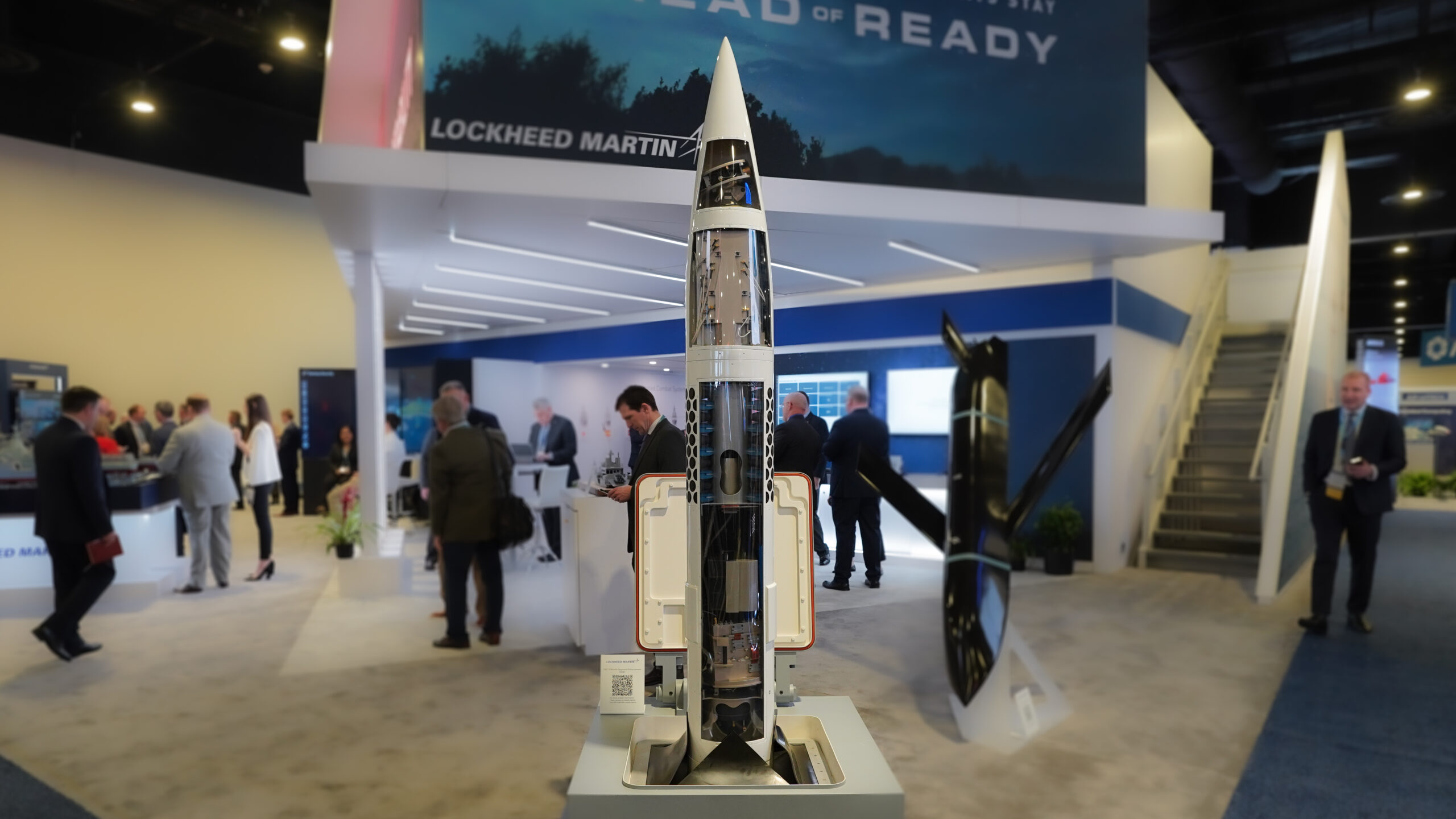
Lockheed offered an interesting look at the internals of their PAC-3 Missile. (Brendon Smith / Breaking Defense)
At the Raytheon booth, their new missle offerings could be seen from across the show floor. Up close it was hard to take in the enormity. Raytheon says these missiles, both. long and short range, will prove critical. (Brendon Smith / Breaking Defense)
The Australian pavilion at Sea Air Space 2024 was a popular location for visitors, with the AUKUS agreement being a major part of this year's conversation. (Aaron Mehta/Breaking Defense)
At the BlueHalo booth their CUAS offering touts advanced tracking that can operate in any sky condition, longer range, and a more powerful "High Energy Laser." (Brendon Smith / Breaking Defense)
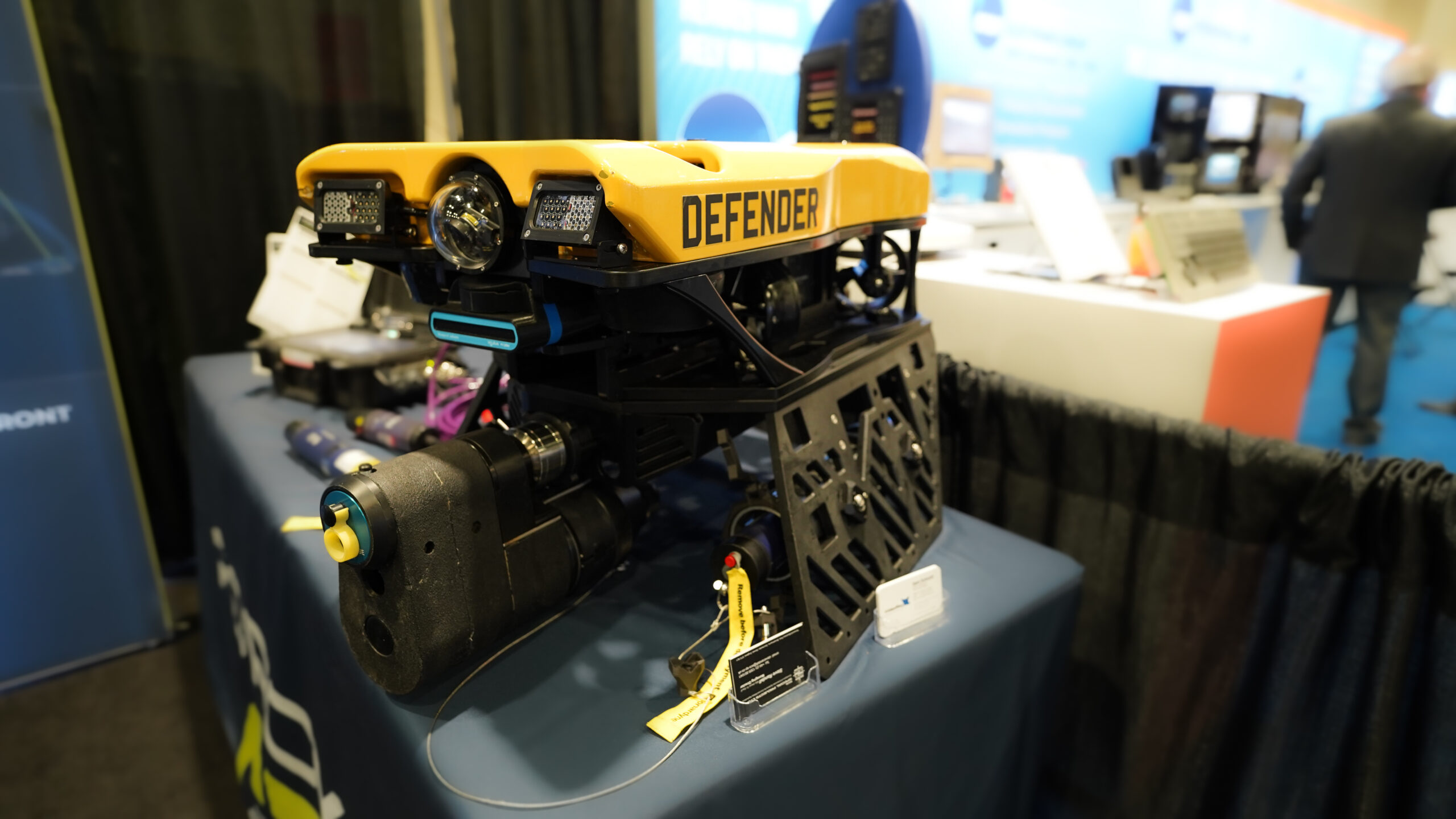
The Forcys Defender is a deep sea submersible meant to snuff out underwater explosives from a distance. (Brendon Smith / Breaking Defense)
US Secretary of the Navy Carlos Del Toro was the keynote speaker on day 2 of the 2024 Sea-Air-Space conference. Del Toro recently released a shipbuilding review that found serious delays for key navy programs. (Brendon Smith / Breaking Defense)
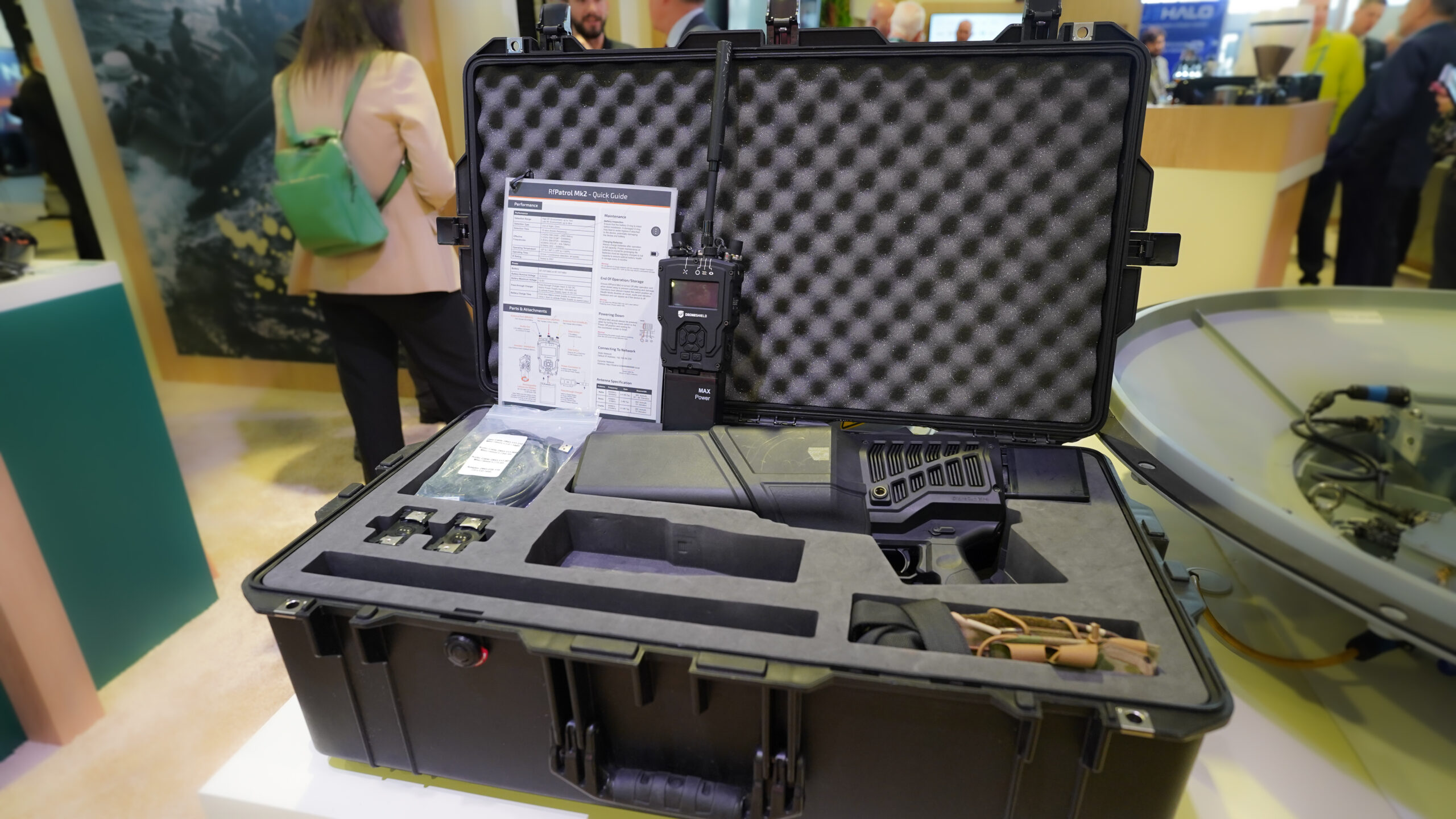
DroneShield's RfPatrol Mk2 is a compact mobile CUAS system that aims to provide highly effective low maintenance support. (Brendon Smith/Breaking Defense)
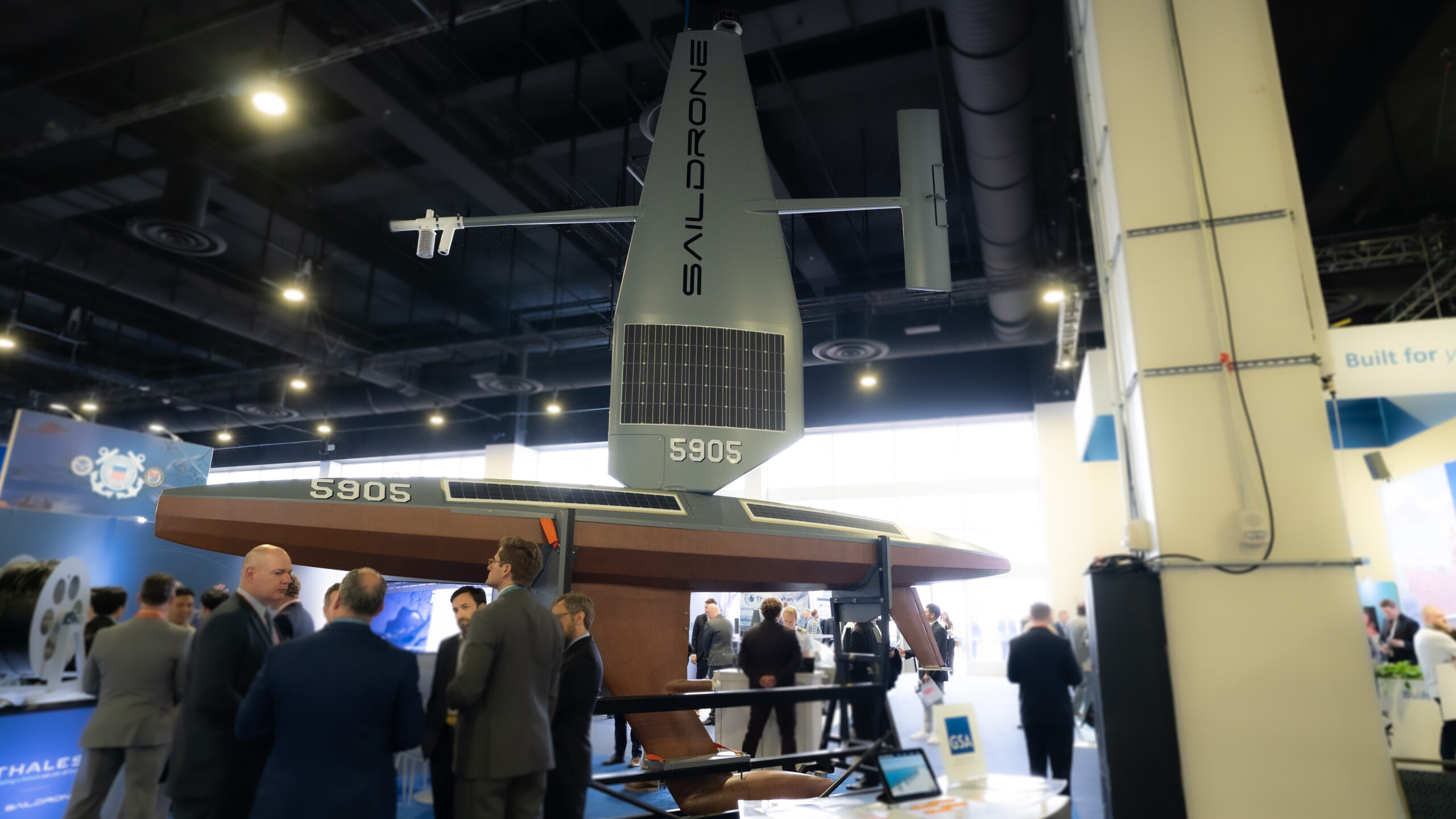
Surface drone maker Saildrone brought a model of its 5904 long range autonomous MDA/ISR solution. The company has seen its systems active in the waters of the Gulf in recent years. (Brendon Smith / Breaking Defense)
The show isn't just about big hardware. Defense Marine Solutions offers an "expansion of DMS' marine propulsion and propeller repair" with state of the art underwater support systems. (Brendon Smith / Breaking Defense)
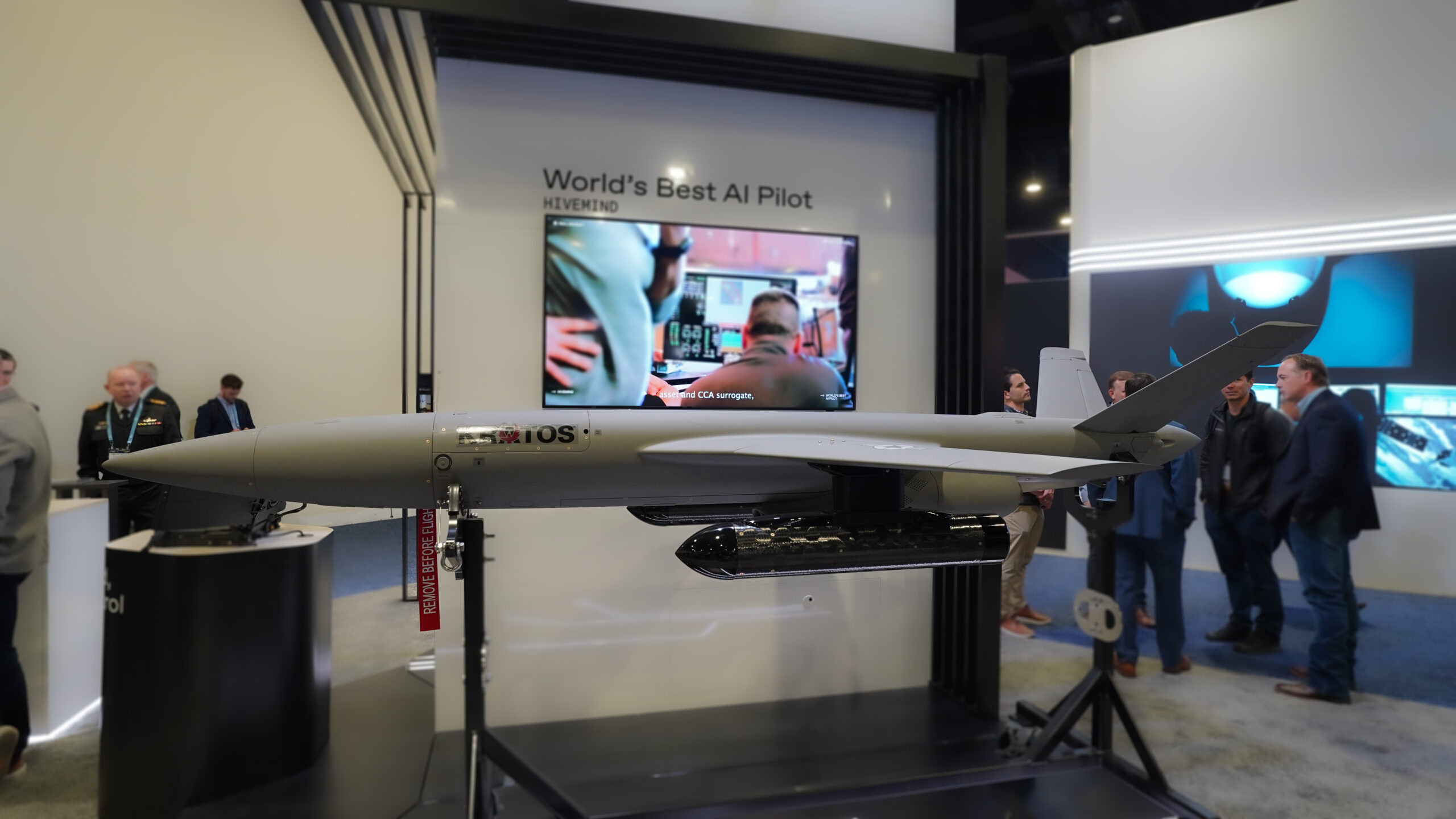
Kratos is teamed with Shield AI on this system, which the companies say will deliver state of the art AI drone piloting and the ability to complete mission objectives without gps, waypoints, or comms. (Brendon Smith / Breaking Defense)
A look at Northrop Grummans Autonomous VTOL Uncrewed Aircraft System at their booth. This was the first time the company brought the UAS to a show. (Brendon Smith / Breaking Defense)
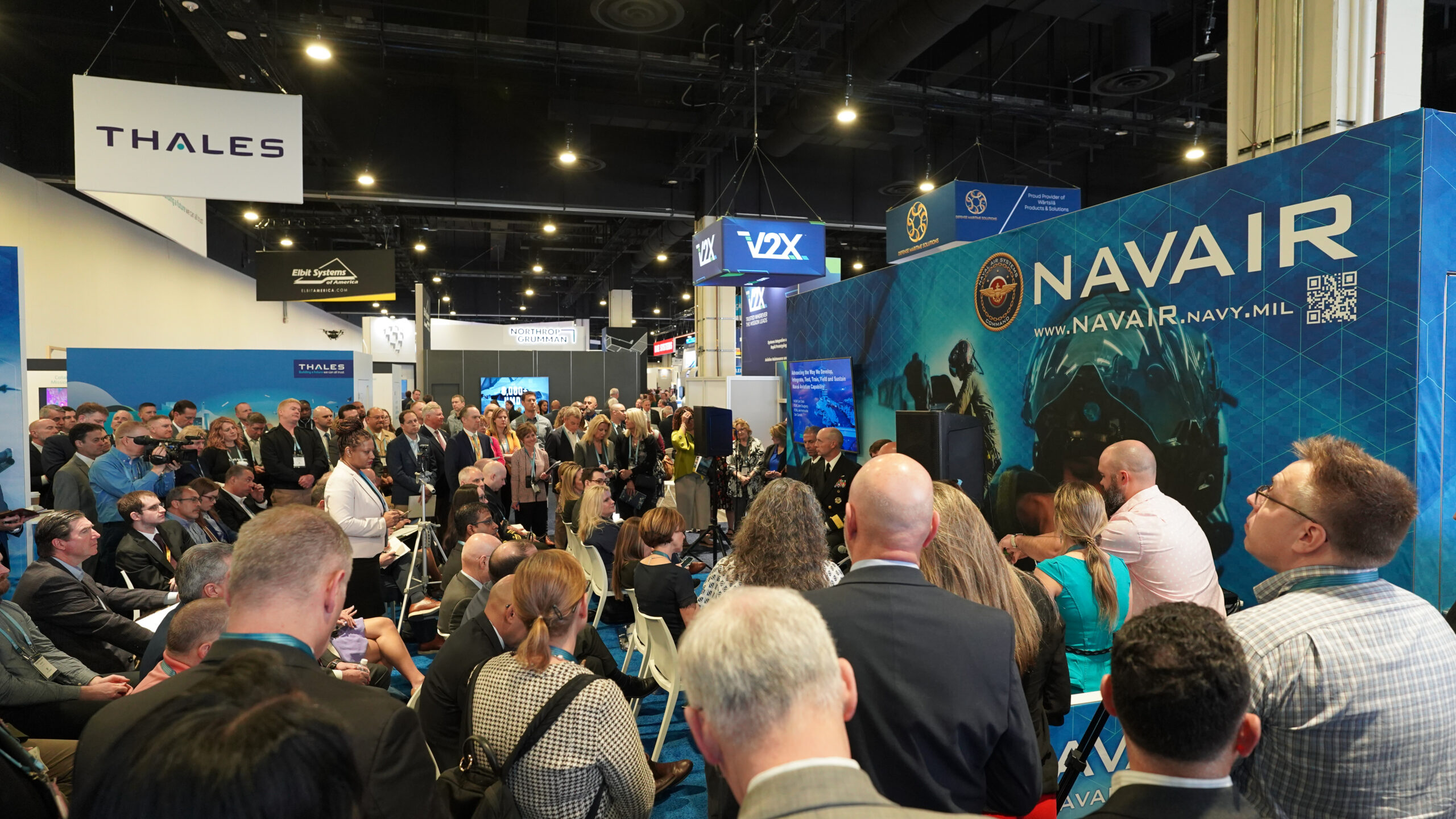
Attendees gathered on the showroom floor for a packed NavAir leadership panel. (Brendon Smith / Breaking Defense)
What the company says is a first of its kind fully solar unmanned submarine, Ocean Aeros "Triton" looks to allow longer duration surveys and other deep sea mission objectives. (Brendon Smith / Breaking Defense)
Lincoln electrics Cooper Cobot is meant to increase welding efficiency and accuracy. Acting as a productivity enhancing collaborator for its human counterparts. (Brendon Smith / Breaking Defense)
ELESIA's Single Operator MFC12 Console resists shock and vibrations on navy operations by "floating" within various shock absorbers. (Brendon Smith / Breaking Defense)
Attendees taking a break from the showroom floor to witness the solar eclipse Monday. (Brendon Smith / Breaking Defense)
A cartoonist at the Carahsoft Booth was drawing caricatures of various attendees throughout the show. (Brendon Smith / Breaking Defense)
The Arete PILLS is what the defense firm says is a "streak tube imaging lidar" system with high resolution cameras and a AIRTRAC laser enhancing pulse rate frequency. (Brendon Smith / Breaking Defense)
ANDURIL's Roadrunner-M missle interceptor is "built for ground-based air defense that can rapidly launch, identify, intercept, and destroy" various aerial threats. (Brendon Smith / Breaking Defense)
Breaking Defense Video