Brig. Gen. Heather Pringle, AFRL director
WASHINGTON: US service science and technology leaders want to expand collaboration with their regional counterparts in the Indo-Pacific — and to start working together earlier in the development process. That means not just kludging largely-finished systems together towards the end of development, which can at best achieve “interoperability,” but cooperating on early-stage research and requirements development to achieve technical “interchangeability.”

Rear Adm. Lorin Selby,
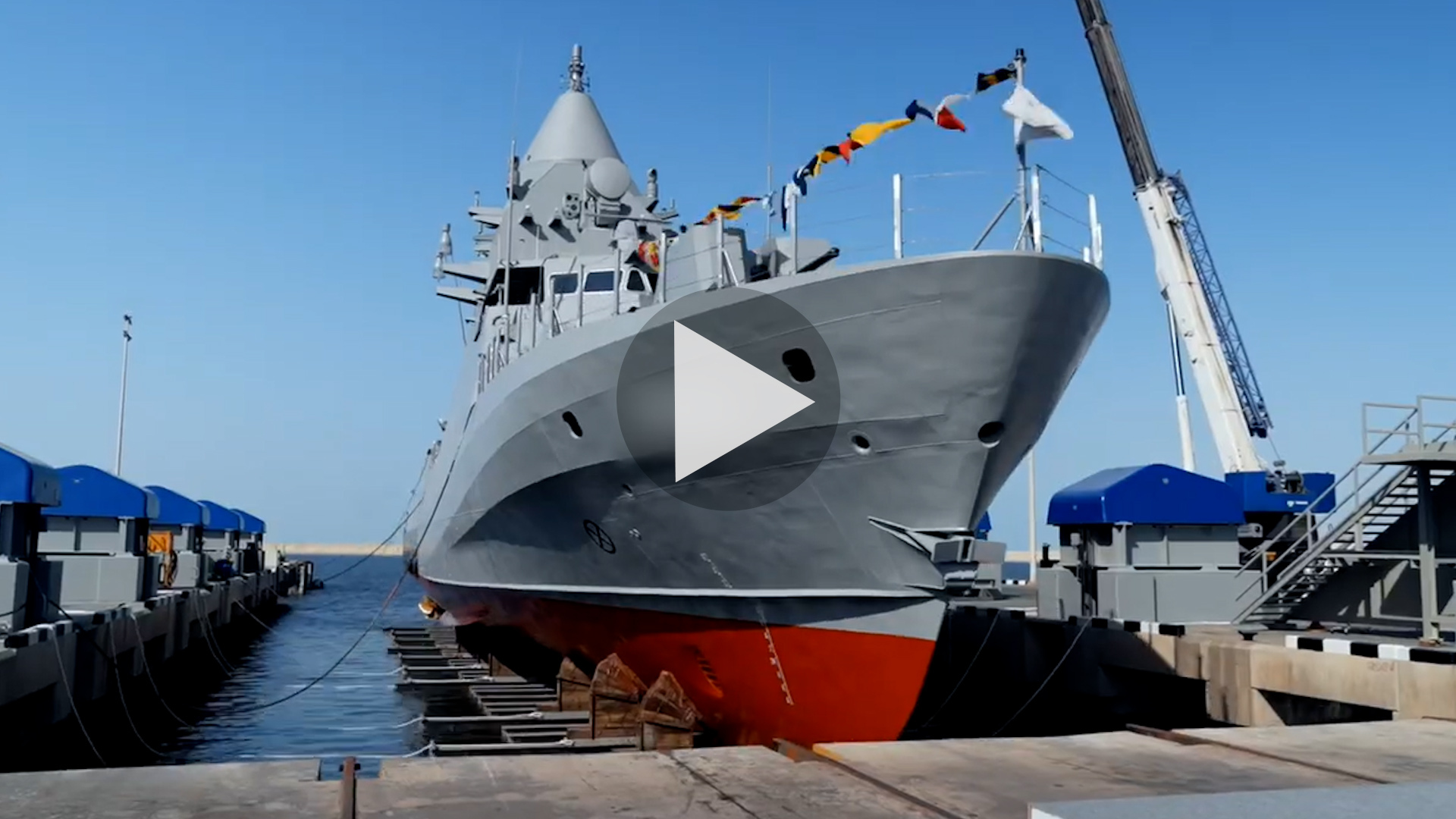
For example, said, Rear Adm. Loren Selby, chief of the Office of Naval Research (ONR), “You could literally take a system — say, an unmanned system — and you could send it off of the deck of the Australian frigate, and you can pick it up from a US destroyer, where I can recharge it, download data, re-task it, send it back out, and then the Australians can pick it up. That’s the concept. And that’s what we’re trying to get after with with a lot of our partners.”
The hoped-for result is a wider pool of talent aimed at cutting-edge research designed to accelerate development of weapon systems to counter growing regional threats, Air Force, Army and Navy officials said yesterday. While none of the officials speaking at the National Defense Industrial Association’s 2021 Pacific Operational Science & Technology (POST) Conference specifically named China as the source of those growing threats, the focus on Beijing’s technological advances was crystal clear.
The Air Force Research Laboratory (AFRL) already has agreements with partners in Taiwan, South Korea, Australia, New Zealand, Japan, Singapore, and India, said AFRL Director Brig. Gen. Heather Pringle. “I’m really happy to report that AFRL has 17 active agreements with partners in this region — some of these are multilateral, and some are one-on-one — and we have 34 more in the pipeline.”
Pringle said that the ever-increasing pace of technological change does not only benefit the United States, but “also leads to advances in the threat.” From cruise missiles to more robust anti-access/area denial technologies, she said, “there are a lot of challenges that are unique to this region” that are compounded by adversary “advances in technologies.”
Thus, Pringle said, AFRL has placed a “top priority” on cooperation in the Asia-Pacific, with a dedicated office in the region seeking to expand partnerships “focused a lot on some of the same issues that this region cares about … artificial intelligence, advanced manufacturing, biotechnology, data, science, space, and quantum, just to name a few.”

INDOPACOM map
Selby said the Navy also has a “really heavy focus” on the Indo-Pacific region, especially with “Japan, Korea, Singapore, and Australia.” It is “ONR Global” that is often at the forefront in establishing relationships in the region, he said.
Selby explained that he has another role as well, as senior national naval representative “looking more at the requirements side of the business.” And it is in the area of requirements where he sees the most fruitful change in the nature of US cooperation with allies and partners — that is, movement toward embracing the concept of working together to develop “common” systems to fulfill to “mutually agreed requirements.”
“It’s this idea of ‘interchangeability’,” he said. “We often talk about ‘interoperability’, okay, the ability to operate with another nation, or even among the services … But there’s a distinct difference between interoperability and interchangeability.”
Interchangeability, he explained, “is really a concept where you start from kind of the S&T base, work together on a project, and as that gets more and more mature, you get to a point where both nations say, ‘you know, we’re gonna go buy this.’ And we may do it separately –we probably will — in our respective countries in our respective defense industrial bases or small businesses. But at the end of day, we’ve developed those specs and standards together.”
Likewise, Pringle said, AFRL is also “upgrading our partnership strategy to really keep pace with the changes that we see in this region and with the world and to better posture us to deal with the future challenges that are coming down the pike.”
Mike Monteleone, head of the Army’s Space and Terrestrial Communications Directorate, said a top priority for the service is “mission command and intelligence data convergence,” with the Army trying to expand its sources of data to include not just the other services, but also coalition partners. The idea, he said, is to be able to “share that [data] freely, and quickly make sense of it.”
Other areas of research relevant to the Army’s far-flung operations in the vast Asia-Pacific region are: “resilient and intelligent communications and networks,” he said, and “countermine technologies,” given the history of conflict that has left many countries with a deadly legacy.
Lastly, he said, the Army is keen to cooperate with allies and partners on the issue of maintaining access to power sources.
“I ended on power on purpose, because it’s all about not just gaining power, it’s about multiple power sources, it’s being able to store power, it’s also be able to distribute power and share power, both with our joint partners and the nation states that often support us,” Monteleone said. “So, power is a key enabler for the Army. We have to carry everything on our back; often we have to bring our network to the fight. And our centers all have to be driven off of low-power sources, including all of our communications assets.”
Breaking Defense Video