Land Warfare

‘Get well’: Army’s upgunned Stryker approaches first fielding but trio of problems linger

“I want to make it very clear that the turret is not a mission essential system, if the turret was to go down, the vehicle is still mission capable,” said Clifton Boyd, the project manager for the Stryker brigade combat team.

MCWS

The Army provided new details about plans to fix its new upgunned Stryker vehicle this week. (Aaron Mehta/ Breaking Defense)

AUSA 2024 — The US Army is on track to begin receiving upgunned Stryker vehicles early next year, but there are several lingering deficiencies that will need to be addressed down the road, according to a pair of service officials.

The service has had fits and starts integrating a 30mm cannon onto Double V–Hull A1 Stryker infantry carrier vehicles, including software-driven issues that prompted a slight delay in fielding the system, formally the Medium Caliber Weapon System (MCWS) program. Production verification testing has now been completed and the Army is poised to begin delivering the vehicles to soldiers next year.

However, testing showed three key fixes need to be made.

“[We’re] actually going to work as fast as we can to get them fixed, but as part of our material release process, we have to submit a ‘get well’ plan to the Army, and that ‘get well’ plan allows us to have up to three years,” said Clifton Boyd, the project manager for the Stryker brigade combat team.

The three key issues to address, Boyd said, are “software glitches” with the display that continue to crop up, light emission through vehicle seams, and a casing ejection problem that leaves rounds rolling around on the deck of the vehicle or can “jam” the turret. That last issue is the most notable, because if not corrected, it potentially leaves soldiers without a cannon on a battlefield — the entire purpose of the vehicle upgrade.

Boyd, however, downplayed the severity of the problem, saying the true purpose of the vehicle is to move soldiers across the battlefield, with the gun more of a nice-to-have than must-have for the Stryker’s core operational purpose.

“I want to make it very clear that the turret is not a mission essential system, if the turret was to go down, the vehicle is still mission capable… because it delivers infantry soldiers to the fight,” Boyd told reporters on Tuesday

The service and Oshkosh, Boyd said, are still working on the fixes and will have up to three years to roll them out.

In an interview with Breaking Defense today, Oshkosh Defense’s chief programs officer Pat Williams said the company has not yet seen the test report but will receive it in November. At that point, he said, it will have more insights into thedetails of the problems outlined by Boyd, and can plan the road ahead.

Despite those issues, the Army still says it’s going forward with fielding the upgraded Strykers, with Oshkosh on contract to upgun 269 vehicles across three brigades. After recent force structure changes, the service 65 upgunned Strykers, with a third receiving 83. Another 20 vehicles are bound for the schoolhouses and testing, while the service is still deciding what to do with the remaining 36 vehicles.

“If we’re going to continue to increase lethality, we are always going to have to modernize, and we’re always going to have to make the system better than when the first soldier gets it,” said Col. Jerome Parker, the director for the Army’s Stryker brigade combat team capability shop. “So yes, this is what we have in 2024. In 2027 we need to make it better, but we need to continue to get that feedback from the force to make it better.”

Aaron Mehta contributed to this report.

PHOTOS: AUSA 2024

PHOTOS: AUSA 2024

At AUSA 2024, land vehicle giant AM General rolled its HUMVEE 2-CT Hawkeye MHS, featuring a howitzer launcher on a hummer. (Brendon Smith / Breaking Defense)
Ammo handling specialists Nobles Worldwide brought its closed loop, linkless ammunition handling system to AUSA 2024. (Brendon Smith / Breaking Defense)
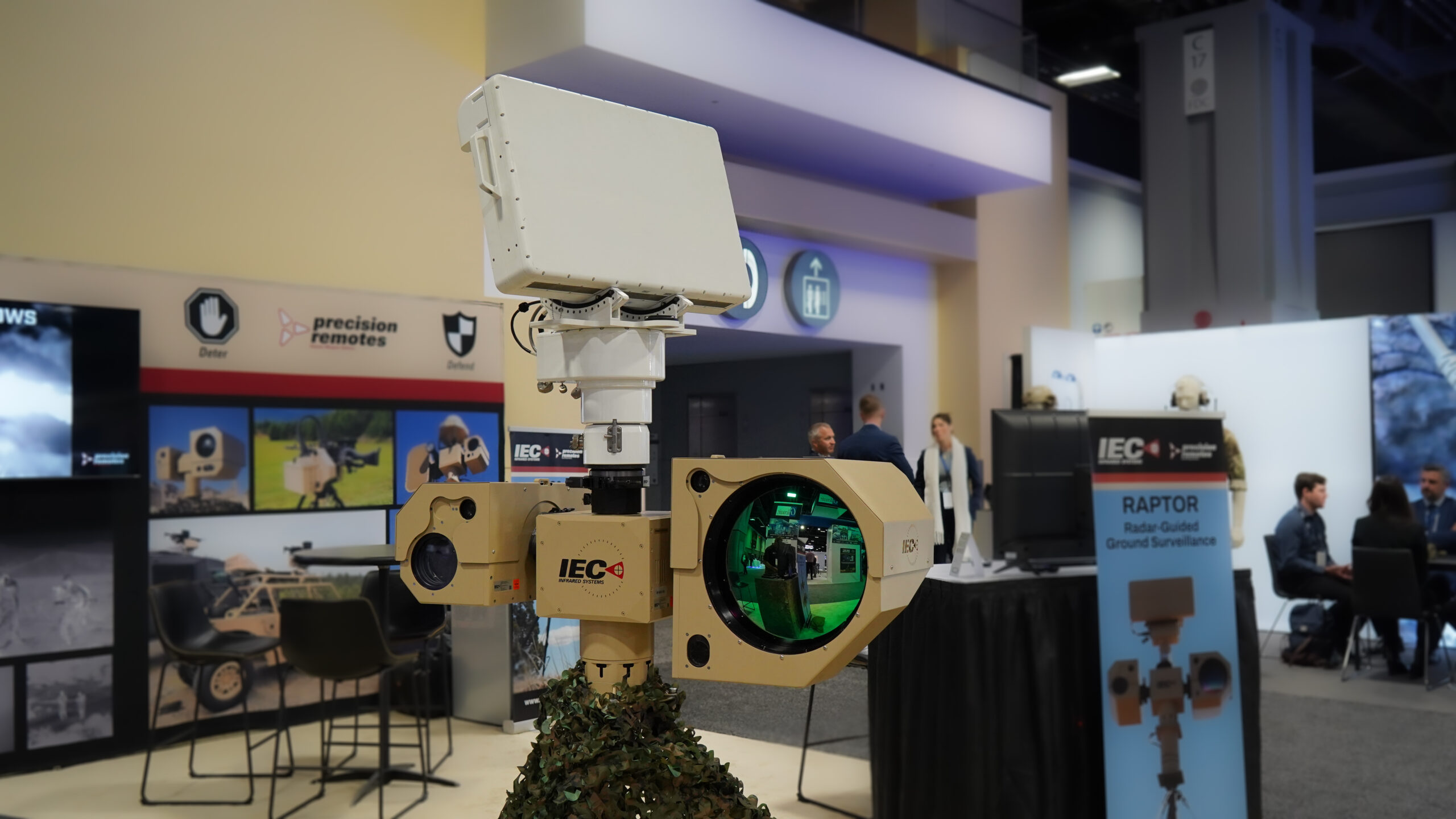
IEC Infrared Systems's Lycan counter-UAS system gazes out at attendees at AUSA 2024. (Brendon Smith / Breaking Defense)
Australian firm EOS was at AUSA 2024, here displaying its Slinger kinetic counter-drone system. (Brendon Smith / Breaking Defense)
Defense start-up Anduril makes a wide range of products and at AUSA 2024, including his platform from its "family of autonomous systems and Electromagnetic Warfare (EW) systems powered by Lattice and AI at the edge." (Brendon Smith / Breaking Defense)
Aimlock, which develops "semi-autonomous precision auto-targeting systems" attached a 12-guage shotgun on a ground robotic vehicle at AUSA 2024. (Brendon Smith / Breaking Defense)
Connecticut-based Kaman Corporation offers unmanned cargo copters, as seen on the show floor at AUSA 2024. (Brendon Smith / Breaking Defense)
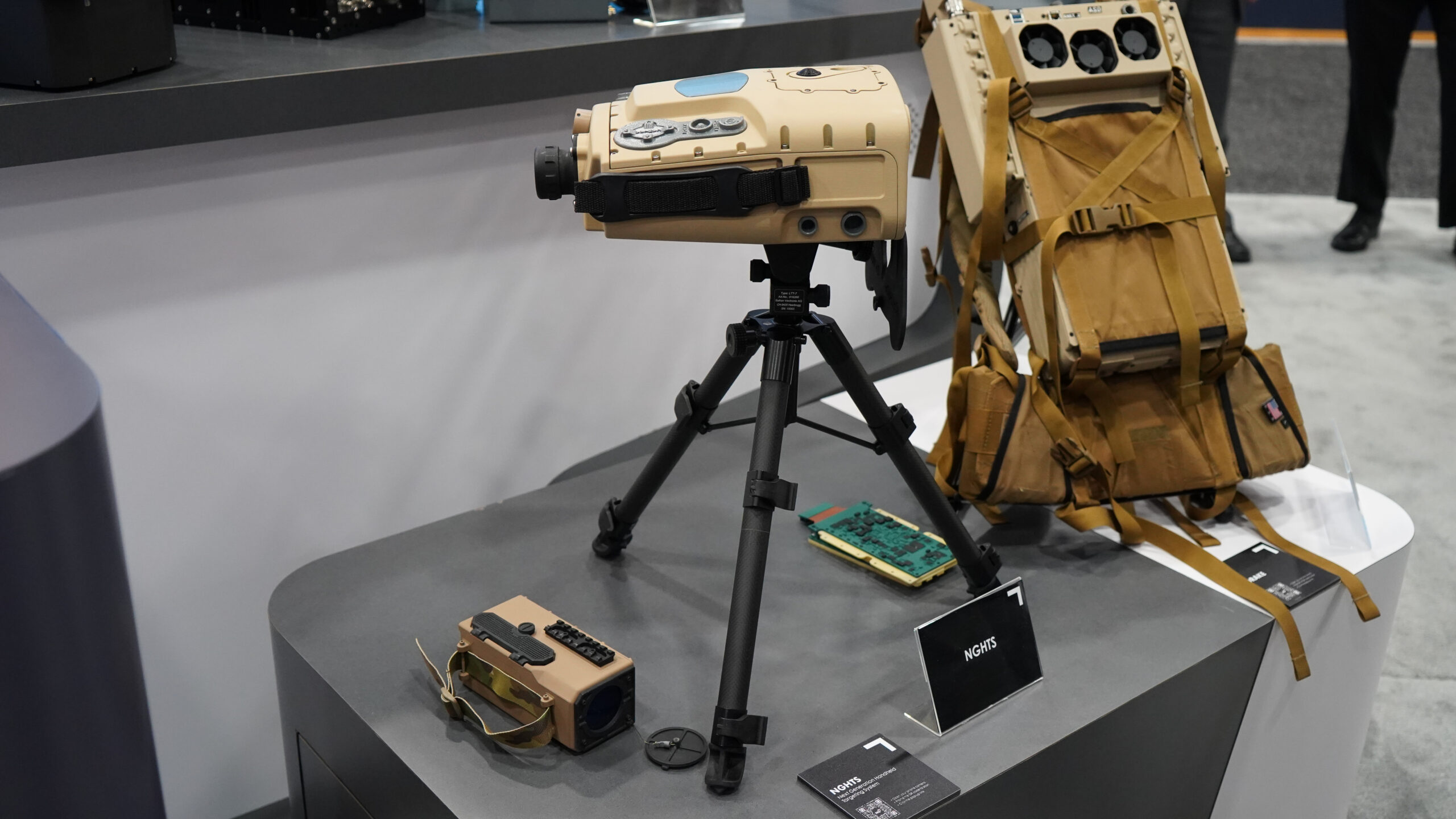
Defense giant Northrop Grumman shows off its Next Generation Handheld Targeting System (NGHTS), which the company says is designed to work in GPS-denied environments. (Brendon Smith / Breaking Defense)
Taiwanese Thunder Tiger displayed an unmanned surface vessel, Seashark, at AUSA 2024. (Brendon Smith / Breaking Defense)
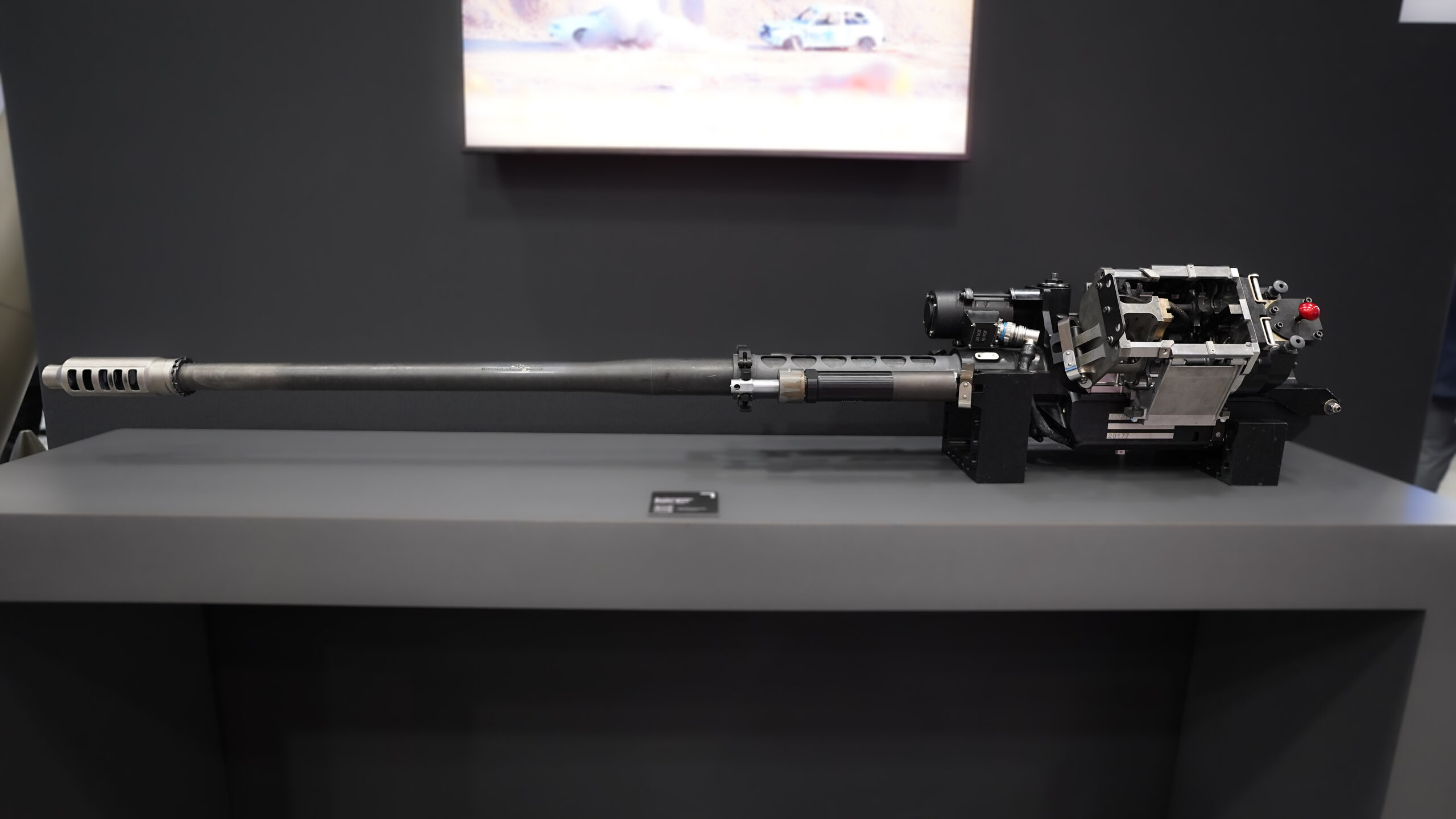
Northrop Grumman shows off its Bushmaster chain gun at AUSA 2024. The company launched a new Bushmaster M230LF (Link Fed) dual-feed chain gun, designed to neutralize UAS and ground threats, with the manufacturer targeting export customers for future orders. (Brendon Smith/Breaking Defense)
It's less ominous than it looks: Avon Protection's Core Intelligent undersuit and MCM100 Multi-Role Military Diving Rebreather are marketed on the show floor to help military divers keep warm under the water. (Brendon Smith/Breaking Defense)
Edge Autonomy shows off its E140Z camera, part of its Octopus surveillance suite. (Brendon Smith/Breaking Defense)
Flyer Defense shows off its Flyer 72 vehicle at AUSA 2024. Selected by SOCOM, the company says it is capable of internal transport in the CH-47 and C-130 aircraft. (Brendon Smith/Breaking Defense)
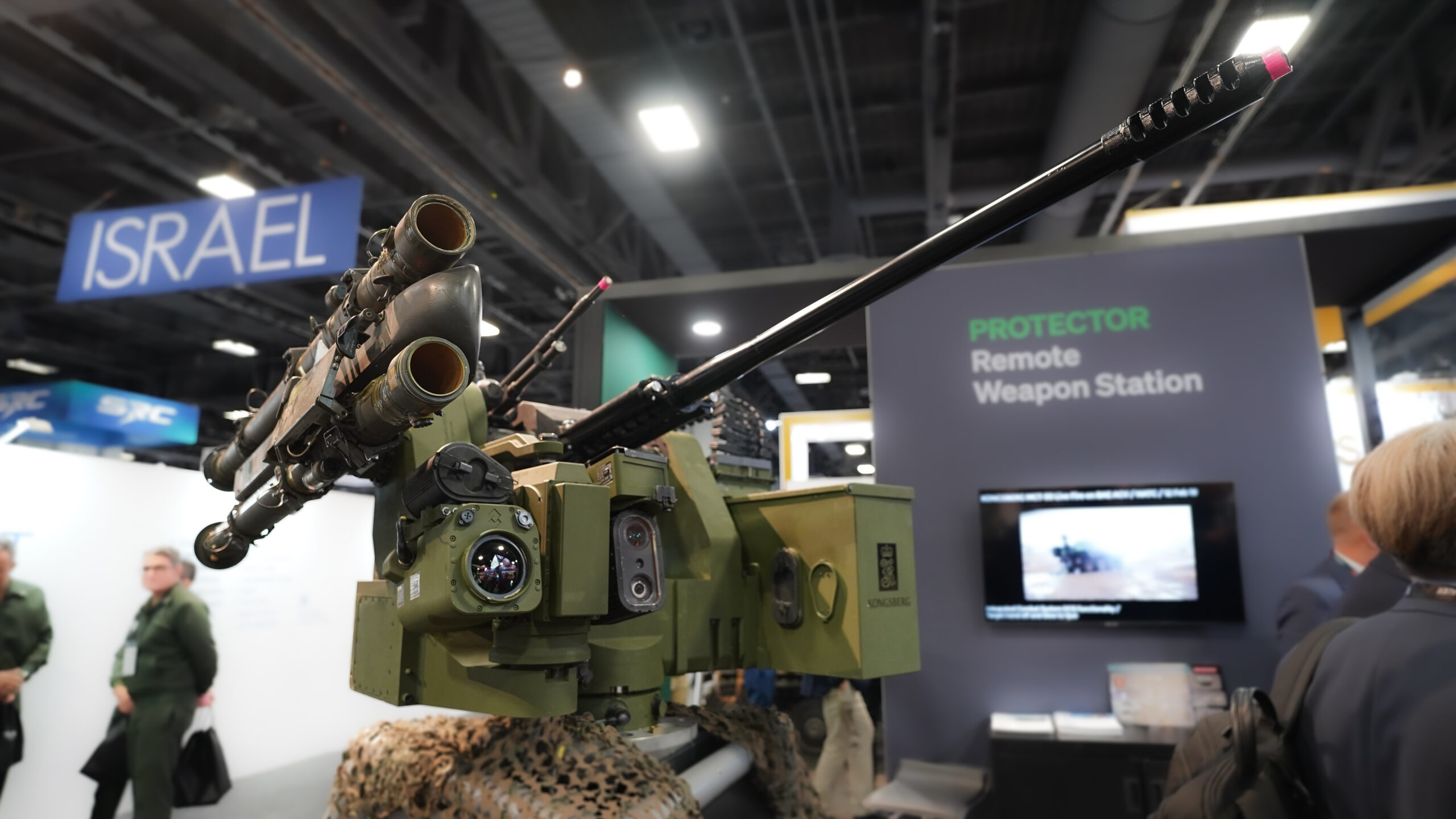
The Kongsberg Protector RS6 is a Remote Weapon System for low-recoil 30mm cannons. The company says it will be able to equip other weapons in the future. (Brendon Smith/Breaking Defense)
Bell helicopters showed off a number of items on the show floor. (Brendon Smith/Breaking Defense)
One of BAE's two AMPV varients on the show floor at AUSA 2024, this one sports the company's Modular Turreted Mortar System. (Brendon Smith / Breaking Defense)
Oshkosh Defense displays its Remotely Operated Ground Unit for Expeditionary Fires (ROUGE-Fires) on the floor at AUSA 2024. (Brendon Smith / Breaking Defense)
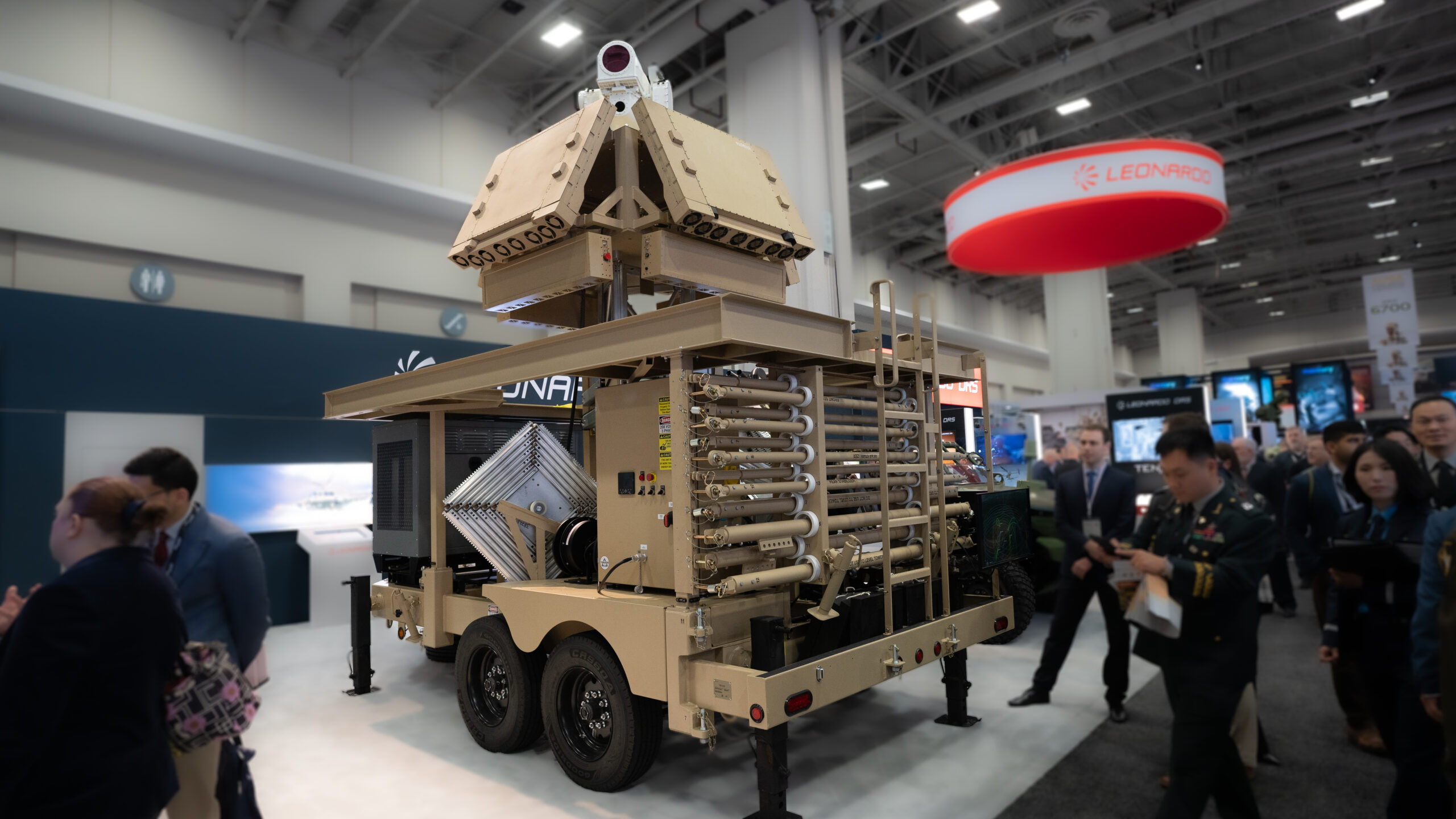
A Leondardo extended mast surveillance system ready to roll into position at AUSA 2024. (Breaking Defense)
Allison Transmission eGen Power motor on display at AUSA 2024. (Brendon Smith / Breaking Defense)
Leidos's Airshield counter-UAS system sits at the company's booth at AUSA 2024. (Brendon Smith / Breaking Defense)
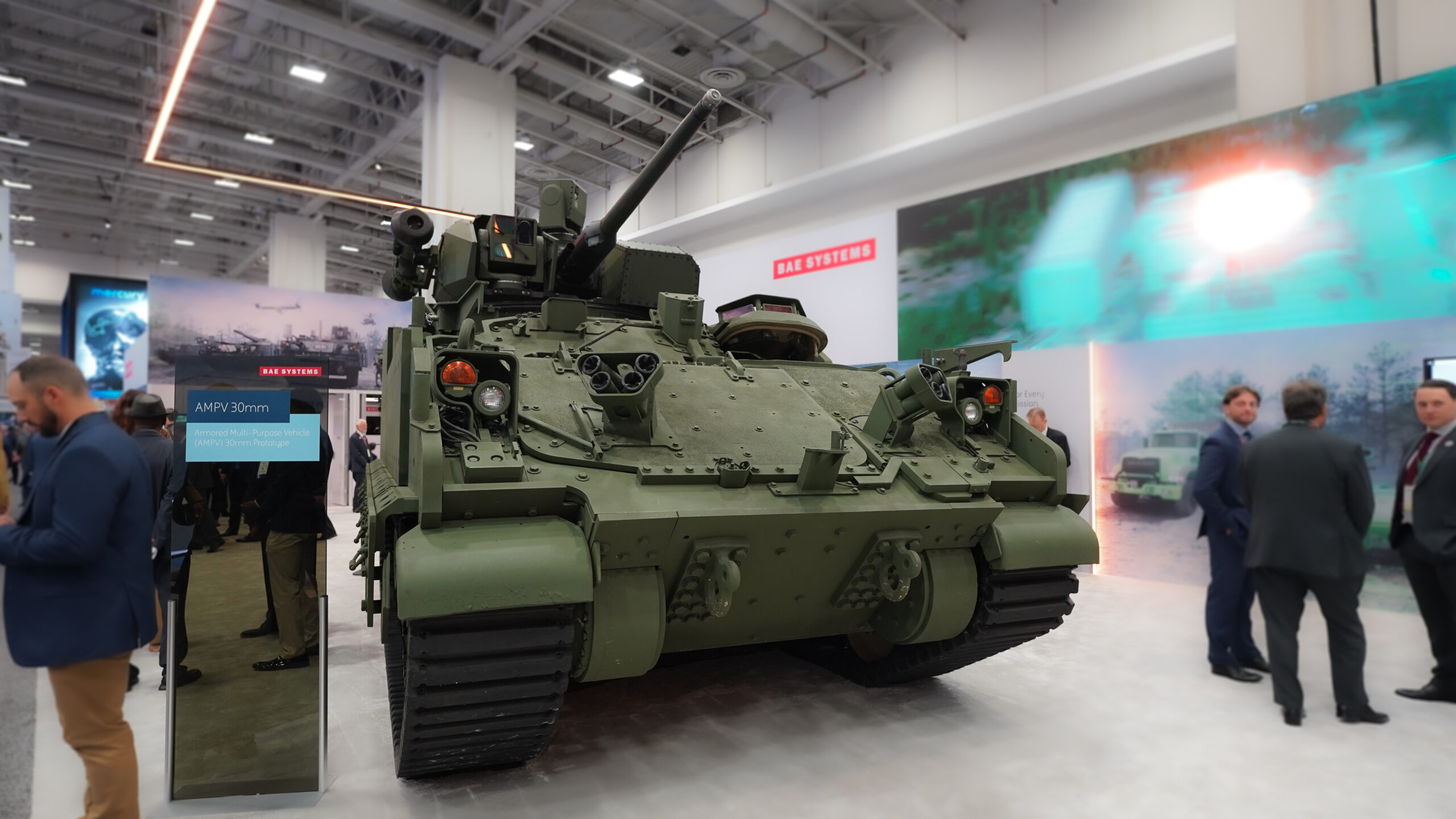
BAE's Armored Multi-Purpose Vehicle (AMPV) with a 30mm gun on display at AUSA 2024. (Brendon Smith / Breaking Defense)
A heavily armed next-gen tactical vehicle on display from GM Defense at AUSA 2024. (Brendon Smith / Breaking Defense)
At AUSA 2024, Rohde & Schwarz displays a mobile signals system known as SigBadger. (Brendon Smith / Breaking Defense)
Breaking Defense Video